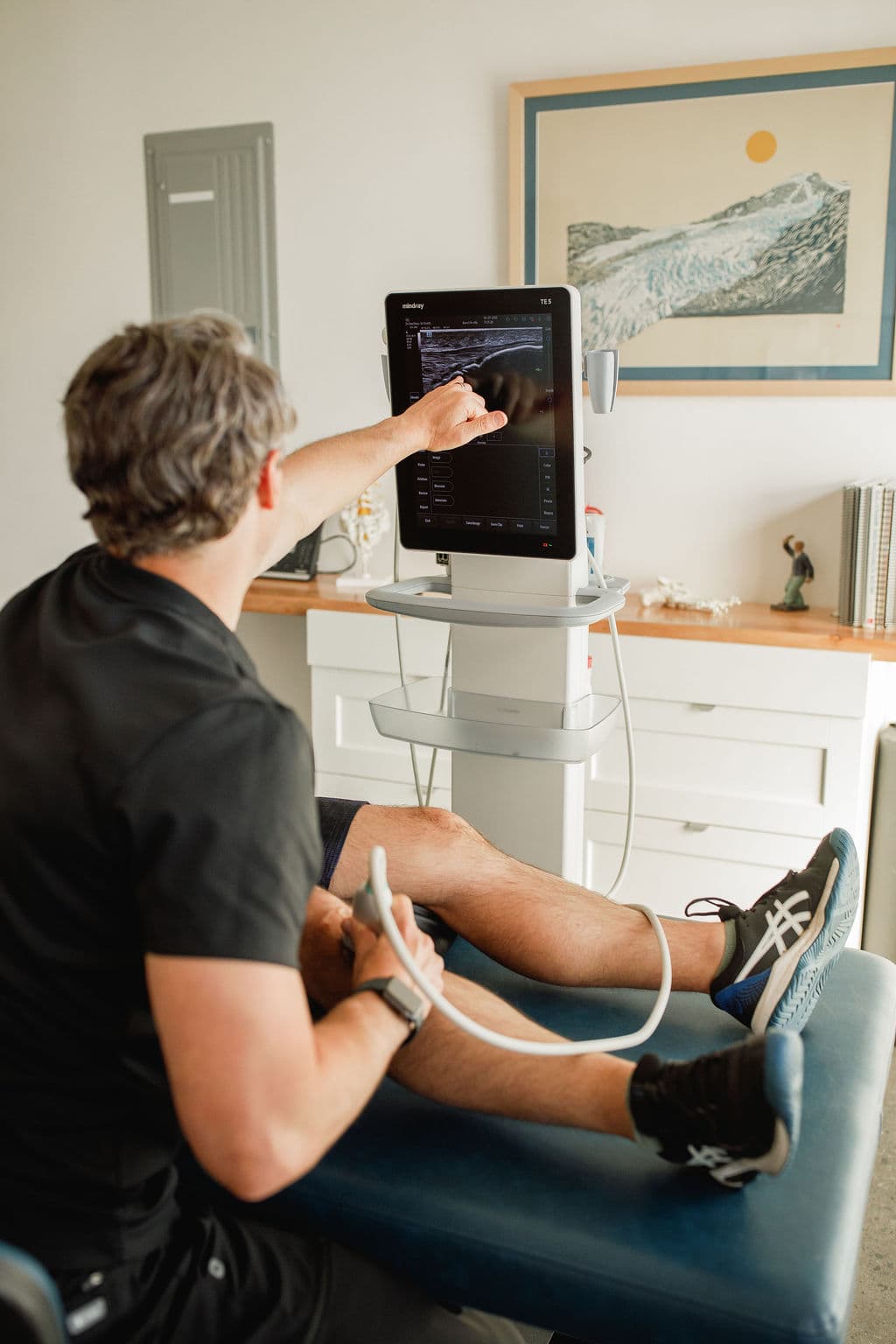
Dr. Borys reviewing a diagnostic shoulder ultrasound with a patient in Bellingham, WA
Back to Conditions
Shoulder pain

Shoulder pain treatment in Bellingham, WA

Shoulder pain has many possible causes, from an irritated tendon or calcium deposit to a stiffening joint capsule or pain referred from the neck. Dr. Borys uses a hands-on exam and, when useful, in-office ultrasound to help work out what is most likely driving yours, so treatment is aimed at the right problem.

Book an initial visit
Common patterns

Does one of these sound like yours?

A useful early clue is whether the shoulder is painful to move or actually blocked from moving. If someone else can lift your arm most of the way, the tendon is the more likely source. If it stays stiff no matter who moves it, the joint capsule is more likely involved. The exam fills in the rest.

Rotator cuff tendinopathy

The most common cause of shoulder pain in adults: an overloaded rotator cuff tendon that hurts with reaching and lifting.

Where it hurts
Outer upper arm, sometimes down toward the elbow
Movement
Painful reaching overhead or behind the back, but the shoulder still moves through most of its range
How it starts
Gradual, often after a change in work, sport, or lifting
Telltale clue
Pain lying on that side at night; motion is painful rather than blocked

Leading treatment: Structured rehab and loading first; PRP if symptoms persist despite rehab

Rotator cuff tendinopathy treatment
Frozen shoulder

The joint capsule thickens and tightens, so the shoulder stiffens in every direction over weeks to months.

Where it hurts
Deep, diffuse shoulder ache that is hard to pinpoint
Movement
Stiff in every direction, especially rotating the arm outward, even when someone else moves it
How it starts
Gradual, most often between ages 40 and 60; more common with diabetes or thyroid disease
Telltale clue
Motion is blocked, not just painful; reaching a back pocket or a seatbelt becomes difficult

Leading treatment: Depends on stage, pain, and stiffness; shockwave and PRP are options

Frozen shoulder treatment

Calcific tendinitis

A calcium deposit inside a rotator cuff tendon that can cause a long-running ache or a sudden, severe flare.

Where it hurts
Top and outer shoulder, often in one spot you can point to
Movement
Often very painful to lift the arm during a flare; motion usually improves as the flare settles
How it starts
Either a chronic ache or a sudden flare with pain at rest and at night
Telltale clue
The deposit usually shows up clearly on ultrasound or X-ray

Leading treatment: Shockwave aimed at the deposit

Calcific tendinitis treatment
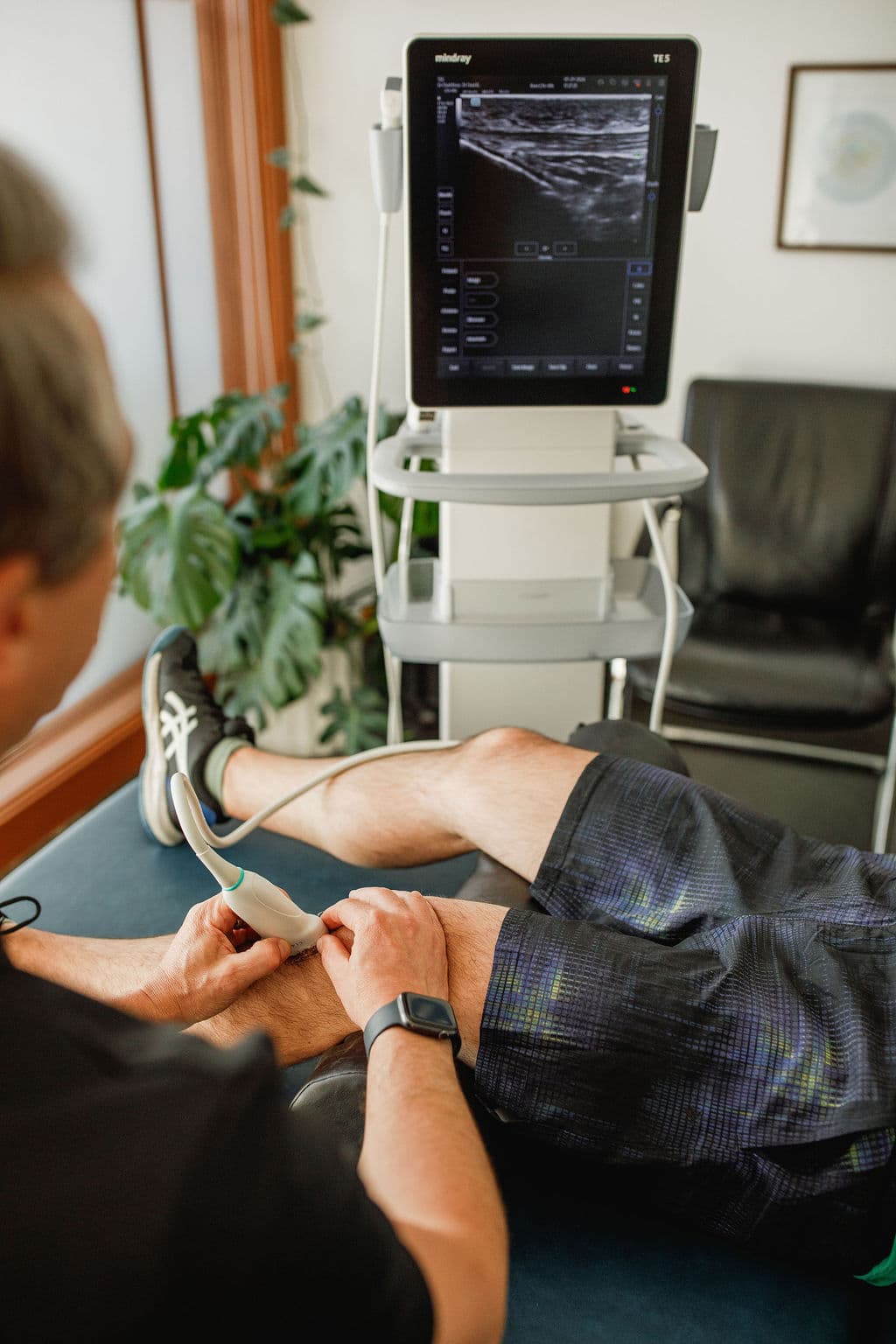
Ultrasound probe positioned over the shoulder during an evaluation
How the evaluation works

Ultrasound in the same visit, when it helps

Your first visit includes a full shoulder exam. When imaging would help clarify the picture, diagnostic ultrasound can be done in the same appointment. It shows the rotator cuff tendons, calcium deposits, and the bursa while you move the arm, so a tear, a deposit, or a thickened tendon can be seen directly.

When the findings point to something ultrasound cannot fully assess, such as a labral tear or a large tendon tear, Dr. Borys refers for an MRI or an orthopedic opinion.

Many patients arrive with an earlier X-ray or MRI. Bring the report, and the images if you have them.

Treatment options

Non-surgical shoulder treatments Dr. Borys offers

Rehab comes first for most shoulder problems. A progressive exercise program and changes to work, sport, or sleep position settle many cases without any procedure. The treatments below are for pain that persists despite that groundwork, or where a specific finding, such as a calcium deposit, calls for a targeted approach.

Other shoulder conditions

Not one of the three above?

These conditions are also assessed at the initial visit. The next step depends on the exam findings, and sometimes that step is imaging or a referral.

  • Shoulder impingement

    Pain with overhead reaching that usually overlaps with rotator cuff tendinopathy and is assessed the same way.

  • AC joint arthritis

    Pain at the top of the shoulder where the collarbone meets the shoulder blade, often worse reaching across the body.

  • Biceps tendinopathy

    Pain at the front of the shoulder with lifting and carrying, often alongside a rotator cuff problem.

  • Labral tears

    Clicking, catching, or a sense of instability. These are best imaged with MRI and may need an orthopedic opinion.

  • Shoulder arthritis

    Wear in the main ball-and-socket joint, causing a deep ache, stiffness, and grinding, usually in older adults. X-ray is often the clearest test.

  • Pain referred from the neck

    Neck problems can send pain to the shoulder blade and upper arm, sometimes with tingling into the hand. The neck is checked when the pattern suggests it.

Frequently Asked Questions

Shoulder Pain: Common Questions

What is the most common cause of shoulder pain?

Rotator cuff tendinopathy is the most common cause of shoulder pain in adults. It typically causes pain over the outer upper arm when reaching overhead or behind the back, and pain when lying on the affected side.

Frozen shoulder and calcific tendinitis are less common but often mistaken for rotator cuff problems. Each is treated differently, so identifying the cause comes before choosing a treatment.

How can I tell frozen shoulder from a rotator cuff problem?

One useful clue is whether someone else can move your arm. With rotator cuff tendinopathy, movement is painful but the shoulder can usually still be moved through most of its range when someone else lifts the arm for you. With frozen shoulder, the joint capsule itself tightens, so the arm stays stiff even when moved by someone else, especially when rotating outward.

A hands-on exam helps clarify the pattern, and diagnostic ultrasound can show whether the rotator cuff tendons are thickened, torn, or calcified.

Do I need an MRI before shoulder treatment?

Often not. Diagnostic ultrasound shows the rotator cuff tendons, calcium deposits, and the bursa clearly, and it can often be done during the initial visit in Bellingham.

An MRI is still the better test for some problems, such as a suspected labral tear or a large tendon tear that may need a surgical opinion. Dr. Borys refers for MRI when the exam points in that direction.

Does shoulder pain usually need surgery?

Most cases of rotator cuff tendinopathy, frozen shoulder, and calcific tendinitis improve with non-surgical care. Exercise-based rehab, shockwave therapy, and PRP all have research support for specific shoulder conditions.

A large, recent full-thickness rotator cuff tear in an active person is one situation where an early surgical consultation makes sense. Dr. Borys refers to orthopedic surgeons when the findings call for it.

Is shoulder pain treatment covered by insurance in Bellingham?

The initial evaluation is a standard office visit and may be billable to insurance depending on your plan. PRP and shockwave therapy are generally not covered and are paid out of pocket.

Dr. Borys treats shoulder pain in Bellingham, WA, serving patients from Whatcom County, Skagit County, and the San Juan Islands.

Bellingham, WA

Find out what is causing your shoulder pain

Dr. Borys sees shoulder patients at his Bellingham clinic, serving Whatcom County, Skagit County, and the San Juan Islands.

The information on this page is for general educational purposes only and is not individual medical advice. It is not a substitute for a consultation with a qualified provider. Whether a treatment is appropriate depends on your individual evaluation, and individual results vary.