Shockwave Therapy in Bellingham, WA
Non-invasive radial shockwave therapy for chronic plantar fasciitis, calcific shoulder tendinitis, tennis elbow, and persistent tendon pain.
Extracorporeal shockwave therapy (ESWT) delivers acoustic pressure waves through the skin to stimulate a renewed healing response in tissue where recovery has slowed or stalled — no needles, no anesthesia, little to no downtime.
Book an initial visitWhat is shockwave therapy?
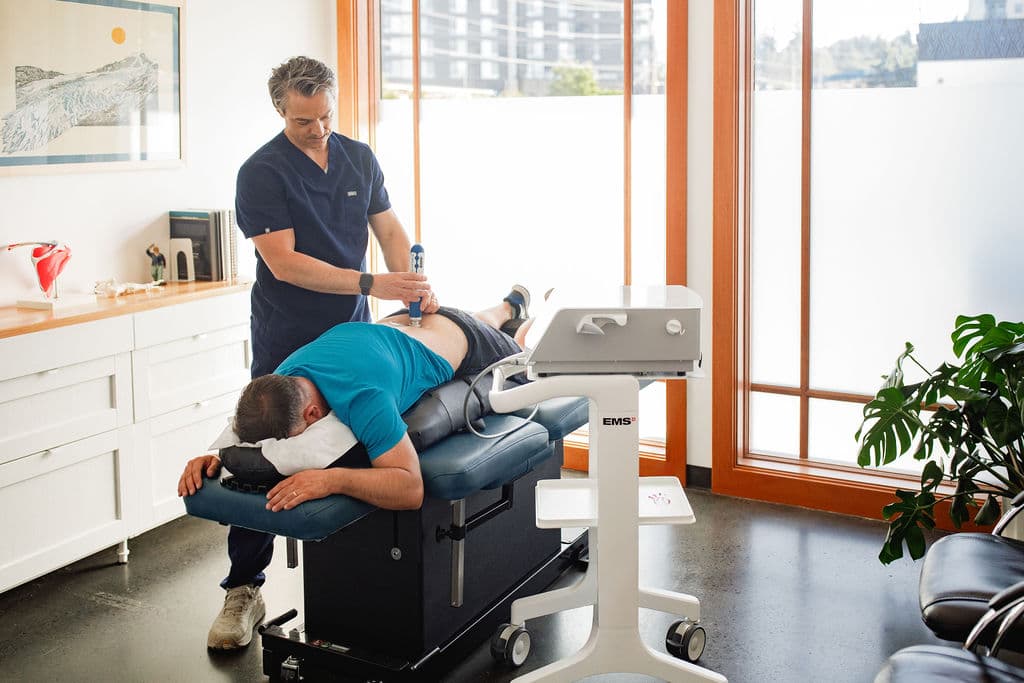
Shockwave therapy is a non-invasive treatment that applies acoustic pressure waves through the skin to support healing in tendons, ligaments, and other soft tissue — especially in areas where the body's natural repair process has stalled. No needles are involved.
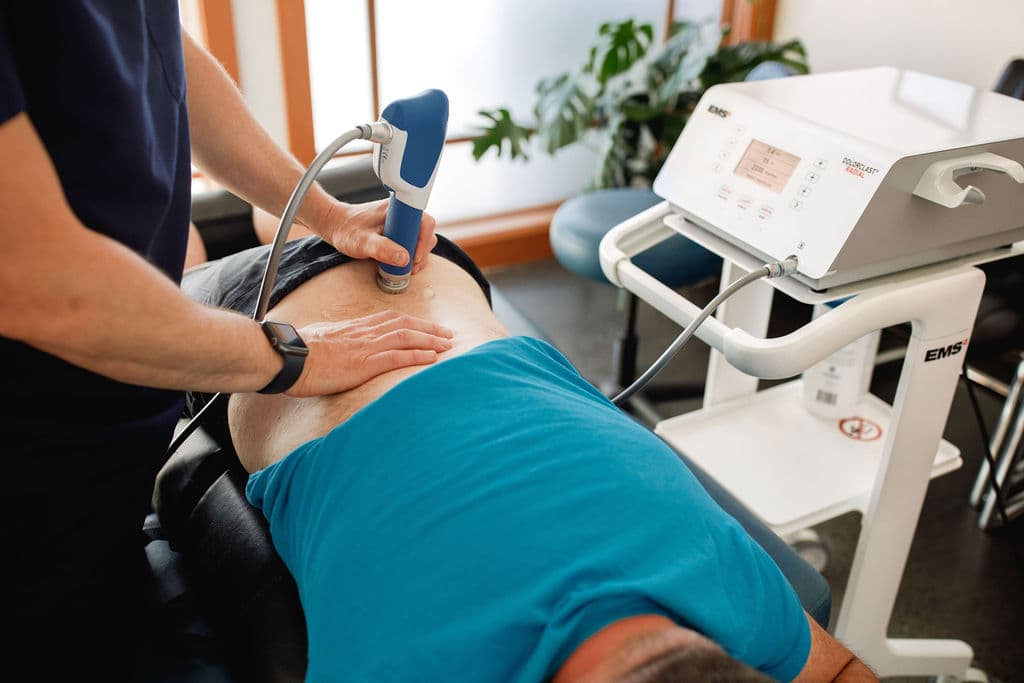
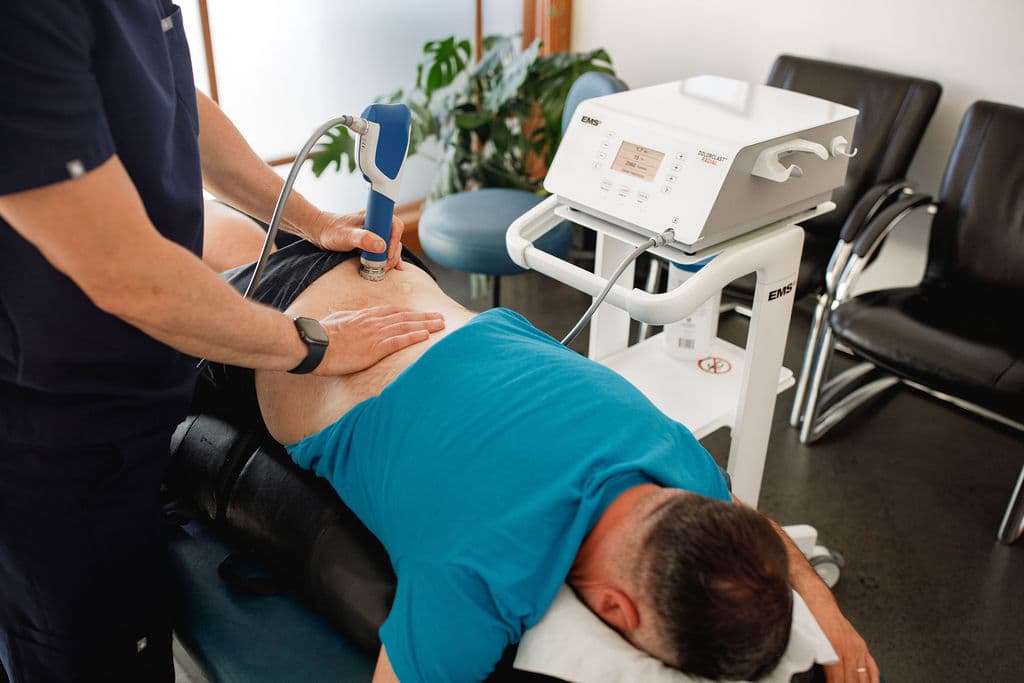
The acoustic waves are delivered through a handheld applicator placed on the skin. They help increase local blood flow and may stimulate remodeling in chronically irritated tissue and calcific tendon problems, supporting the body's healing response. Over time this can reduce pain, improve mobility, and support longer-term recovery in tissue that has become chronically irritated or degenerated.
Shockwave is also frequently used alongside regenerative procedures like PRP — the mechanical stimulus of acoustic waves can complement the biological signal of growth factors, supporting a more complete healing response.
Many patients complete a series of 4–6 sessions, depending on the condition, severity, and response. Sessions take 15–30 minutes in clinic and typically call for only brief activity modification, usually with no meaningful downtime — most patients return to light activity the same day. For a deeper look at the mechanism and research behind it, see what shockwave therapy is and what the evidence shows.
Why radial shockwave?
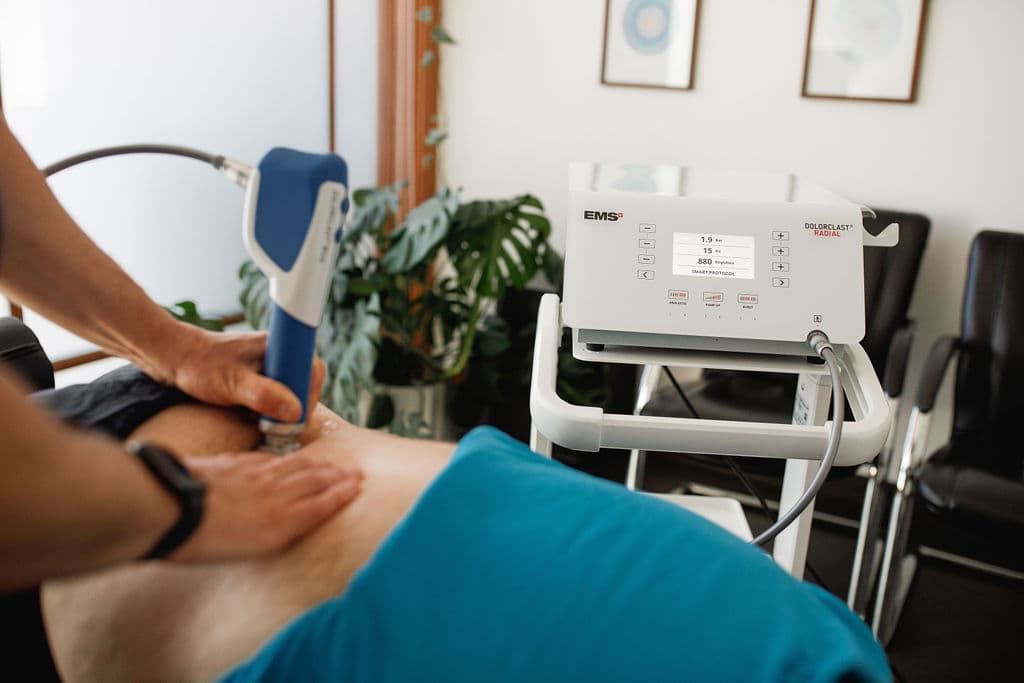
Radial shockwave is well-suited for many chronic tendon and fascia conditions because it treats a broader tissue area, is non-invasive, and can be repeated as part of a short treatment series. It is not the same as focused shockwave — the right choice depends on the condition and the treatment goal.
Who is a good candidate?
Shockwave tends to work best for people with chronic tendon or soft-tissue conditions — typically symptoms lasting more than 3 months — particularly when rest, physical therapy, or anti-inflammatory approaches have provided only partial or temporary relief.
- Pain that has persisted despite conservative care
- Tendon pain or calcifications confirmed on imaging
- Desire to avoid cortisone injections or surgery
How it works
Shockwave triggers the body's natural healing mechanisms through controlled acoustic stimulation.
Waves delivered
Acoustic pressure waves are directed at the injured area through a handheld applicator placed on the skin — no needles, no anesthesia.
Tissue response stimulated
The waves increase local blood flow, may release growth factors, and can help stimulate a renewed healing response in tissue where recovery had stalled.
Remodeling over time
Damaged tissue remodels gradually over the weeks following treatment. Most patients complete a series of 4–6 sessions depending on condition and response.
Benefits of shockwave therapy
Completely non-invasive — no needles or incisions
No anesthesia or medication required
May stimulate a local tissue response that supports remodeling in chronic tendon conditions
Sessions typically 15–30 minutes
Brief activity modification, usually no meaningful downtime — most patients return to light activity the same day
May be effective for chronic conditions that have not responded to other treatments
Conditions Treated
Shockwave is particularly suited for chronic tendon and soft tissue conditions, especially those that have not improved with rest or conventional conservative care. The strongest evidence is for plantar fasciitis, lateral epicondylalgia (tennis elbow), and calcific tendinopathy of the shoulder.
Research
Research is strongest for some conditions and more preliminary for others. The studies below are included to help patients understand where evidence is more established and why proper diagnosis and patient selection matter. They are specific to radial extracorporeal shockwave therapy (rESWT) — the type used in this clinic.
Multiple RCTs and meta-analyses consistently showing meaningful benefit.
Radial ESWT for Chronic Plantar Fasciitis
Placebo-controlled multicenter RCT (Gerdesmeyer et al., Am J Sports Med, 2008) showing radial ESWT is safe and effective for chronic recalcitrant plantar fasciitis.
Read on PubMedRadial Shockwave for Calcific Shoulder Tendinitis
Single-blind RCT comparing radial shockwave, ultrasound-guided needling, and combined treatment for calcific tendinitis of the shoulder — ESWT produced consistent calcium resorption and pain reduction.
Read on PubMedPositive RCTs exist, but sham-controlled trials show inconsistent separation from placebo.
ESWT for Lateral Epicondylitis: Systematic Review
Meta-analysis (Yao et al., 2020) pooling randomized trials for lateral epicondylitis and supporting ESWT as an effective conservative option. Results across individual trials vary, which is why Dr. Borys discusses realistic expectations before recommending treatment.
Read on PubMedRadial Shockwave vs Corticosteroid for GTPS
Landmark RCT (Rompe et al., Am J Sports Med, 2009) comparing home training, corticosteroid injection, and radial shockwave for greater trochanteric pain syndrome — shockwave outperformed corticosteroid at 15 months.
Read on PubMedPromising early data or use alongside other treatments; not yet supported by consistent RCTs.
ESWT for Chronic Achilles Tendinopathy
Evidence is mixed across RCTs. Recent meta-analyses show modest benefit at best. Shockwave may be considered as an adjunct when loading programs have been exhausted, but it is not a first-line standalone treatment for Achilles.
Read on PubMedPRP + ESWT Combination for Patellar Tendinopathy
A 2024 RCT found that combining PRP with shockwave produced better outcomes than either alone for patellar tendinopathy — suggesting a role for shockwave as an adjunct in a multimodal protocol.
Read on PubMedShockwave therapy — Bellingham, WA
Based in Bellingham, Dr. Borys sees patients from Whatcom County, Skagit County, the San Juan Islands, and surrounding Northwest Washington communities.
Shockwave Therapy (ESWT): Common Questions
What is shockwave therapy?
Shockwave therapy, or extracorporeal shockwave therapy (ESWT), is a non-invasive treatment that uses acoustic pressure waves delivered through the skin to areas of chronic tendon and soft-tissue pain. The waves stimulate blood flow and the body’s natural repair process, with no injections, anesthesia, or surgery required.
What conditions does shockwave therapy treat?
ESWT is commonly used for plantar fasciitis, tennis elbow, calcific tendinitis of the shoulder, Achilles tendinopathy, and greater trochanteric (hip) pain syndrome, particularly when symptoms are chronic and have not responded to other conservative care.
Does shockwave therapy hurt?
Patients may feel a tapping or pulsing sensation and some discomfort during treatment, which is usually well tolerated and can be adjusted. No anesthesia is needed, and most people return to their normal activities right after a session.
Is there any downtime after shockwave therapy?
There is generally little to no downtime. Some patients notice mild soreness in the treated area for a day or two afterward, which is a normal part of the healing response.
How much does shockwave therapy cost?
Shockwave therapy is $150 per session. The number of sessions depends on the condition and response to treatment.
Still have questions? Browse all FAQs
Ready to take on stubborn tendon pain?
It starts with an initial visit to discuss whether shockwave therapy is right for your condition — a standard medical evaluation that may be billed through insurance depending on your individual plan and coverage.