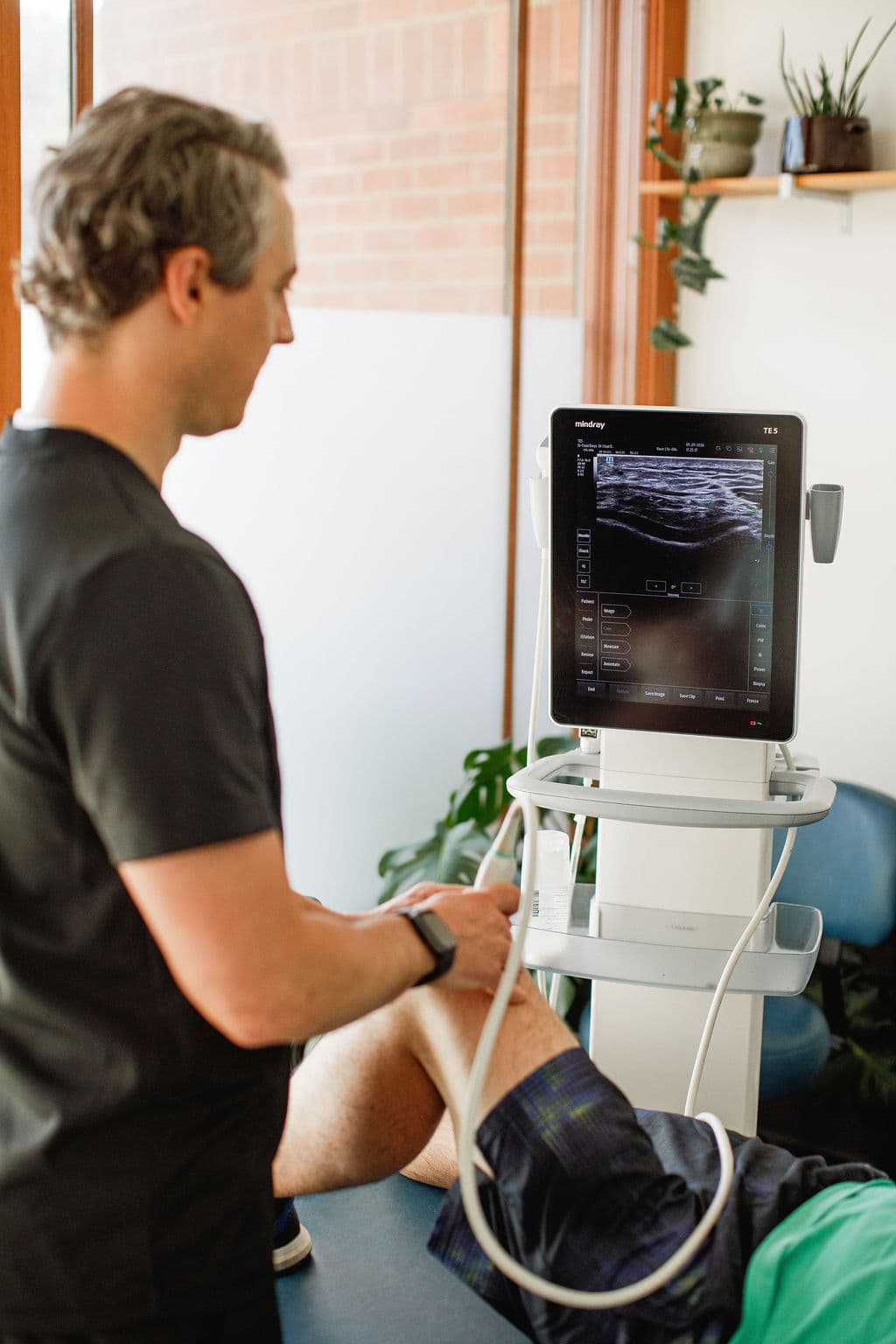
Perineural Injection Therapy
For burning, tingling, or aching pain that follows a nerve path and hasn't responded to standard treatment.
Dilute dextrose injected just beneath the skin along irritated superficial sensory nerves — intended to reduce neurogenic inflammation and calm nerve-driven pain rather than simply covering it up.
Book an initial visitWhat is Perineural Injection Therapy?
This treatment is most often considered when pain has a nerve-like quality — burning, tingling, sensitivity, or pain that seems to travel — and standard joint or tendon treatments have not fully explained the symptoms.
Perineural Injection Therapy (PIT), also known as neural prolotherapy or Lyftogt technique, is a treatment for chronic pain caused by inflamed or dysfunctional nerves. It was developed by Dr. John Lyftogt in New Zealand.
The treatment involves injecting a dilute dextrose solution (typically 5%) just beneath the skin along the path of affected superficial nerves. This solution helps reduce neurogenic inflammation — inflammation caused by the nerves themselves.
Unlike deeper injections, perineural therapy targets the small sensory nerves just beneath the skin that can become chronically inflamed and drive persistent pain patterns.
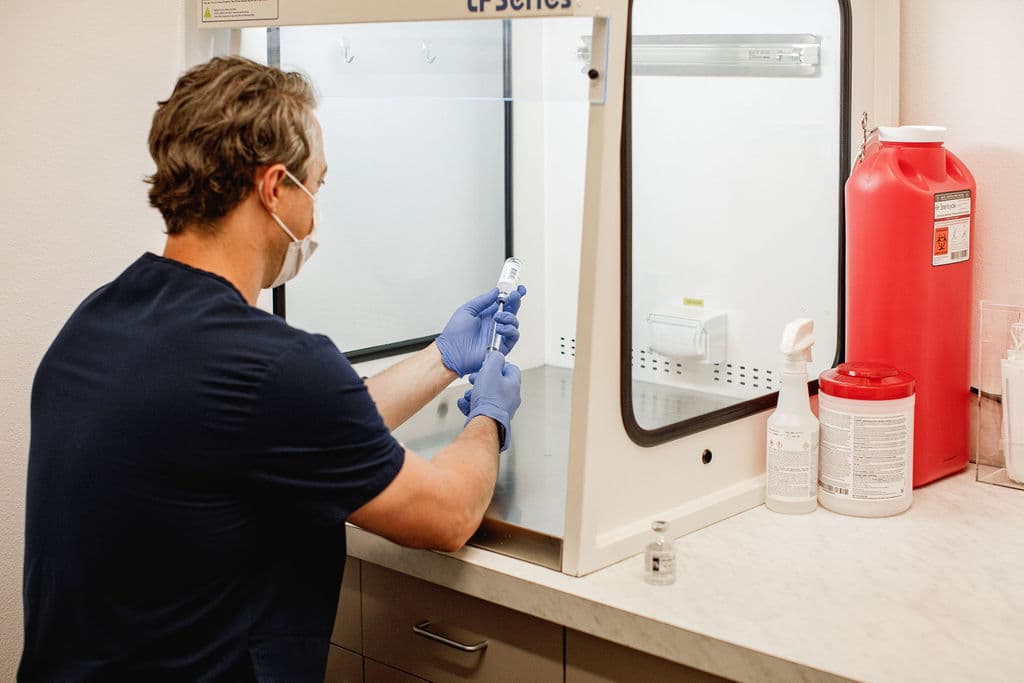
How Perineural Therapy Works
Perineural injection therapy targets superficial nerves to reduce chronic neurogenic inflammation.
Identifying Nerves
Using careful palpation and anatomical knowledge, the affected nerves are identified along their course.
Subcutaneous Injection
A dilute dextrose solution is injected just under the skin along the path of the affected nerve.
Reducing Inflammation
The solution is intended to reduce neurogenic inflammation, helping to calm the irritated nerve and ease pain patterns.
Benefits of Perineural Therapy
Targets nerve-related pain at its source
Calms irritated superficial sensory nerves
Targets neurogenic inflammation directly at the affected nerve
Minimally invasive with minimal discomfort
Can be used alongside PRP or prolotherapy when nerve irritation is a contributing factor
Conditions Treated with Perineural Therapy
Perineural injection therapy is used to address a range of nerve-related and neuropathic pain conditions.
Perineural Injection vs. Nerve Hydrodissection
Both are nerve-targeted treatments, but they work in different ways and address different types of nerve pain.
Evidence-Informed Research
Dextrose perineural injection is supported by a growing body of clinical research. It is worth being precise about what that evidence covers: the strongest trials below studied dextrose delivered around named nerves, often under ultrasound guidance — the same technique used in nerve hydrodissection. Evidence specifically for superficial, subcutaneous perineural injection is more limited and still emerging. Dr. Borys uses these approaches on a spectrum, matching injection depth and guidance to the nerve being treated.
Perineural Dextrose for Ulnar Neuropathy
Randomized, controlled, double-blind study evaluating perineural dextrose injection for ulnar neuropathy at the elbow.
Read on PubMedPerineural PRP vs Dextrose
Prospective randomized head-to-head trial (Shen et al., 2019) comparing perineural platelet-rich plasma and 5% dextrose for moderate carpal tunnel syndrome.
Read on PubMedPerineural Dextrose for Upper Limb Compression Neuropathies
Systematic review and meta-analysis (Azizi et al., Heliyon, 2025) confirming the effectiveness of perineural dextrose injection across peripheral compression neuropathies of the upper limbs.
Read on PubMedRelated conditions
Carpal tunnel syndrome
Median nerve compression at the wrist — treated primarily with hydrodissection, with perineural injection as an adjunct for forearm nerve pain.
Nerve hydrodissection
A deeper nerve-targeted approach for named nerve entrapments — carpal tunnel, cubital tunnel, and similar compression neuropathies.
Perineural Injection Therapy: Common Questions
What is perineural injection therapy?
Perineural injection therapy (PIT), also known as neural prolotherapy or the Lyftogt technique, is a treatment in which small amounts of a dextrose solution are injected just beneath the skin around inflamed superficial nerves. This is intended to reduce neurogenic inflammation and ease chronic nerve-related pain.
What conditions does perineural injection therapy treat?
PIT is used for chronic neuropathic pain, peripheral nerve entrapment and compression neuropathies, and persistent regional pain that involves irritated superficial nerves.
How does perineural injection therapy work?
Irritated superficial nerves can drive ongoing pain and inflammation. The dextrose solution used in PIT is thought to calm these inflamed nerves, interrupting the pain cycle and allowing the nerve to settle and function more normally over a series of treatments.
Does perineural injection therapy hurt?
The injections are shallow and use very fine needles, so most patients tolerate them well. You may feel brief stinging with each injection and some mild tenderness afterward, which typically resolves quickly.
Perineural injection therapy in Bellingham, WA
Dr. Borys offers perineural injection therapy at his clinic in Bellingham, serving patients from across Whatcom County, Skagit County, and the San Juan Islands. Because perineural injections work at a superficial level along sensory nerve branches, they complement the deeper ultrasound-guided techniques used for named nerve entrapments — and the two approaches are often used together in the same treatment plan.
An initial visit includes a full history and physical examination to establish whether neuropathic sensitization is contributing to your pain pattern before any treatment is recommended.
Ready to calm your nerve-related pain?
It starts with an initial visit to discuss whether perineural injection therapy is the right option for your nerve-related pain — a standard medical evaluation that may be billed through insurance depending on your individual plan and coverage.