Prolotherapy
When a joint feels unstable, loose, or like it never fully healed, prolotherapy is a non-surgical injection option for selected ligament, tendon, and joint pain — where laxity, instability, or poor connective-tissue healing is part of the problem.
Book an initial visitWhat is Prolotherapy?
Prolotherapy (proliferative therapy) is a regenerative injection treatment with a long clinical history, used for selected chronic ligament, tendon, and joint pain problems. It involves injecting a solution, typically containing dextrose (sugar water), into targeted ligaments, tendons, joint capsules, or other connective-tissue structures.
Cortisone injections can be useful for short-term relief, but repeated use may have tissue-related downsides in some situations. By contrast, prolotherapy is intended to stimulate your body's own healing response in the treated connective tissue. It is typically given as a series of treatments spaced several weeks apart.
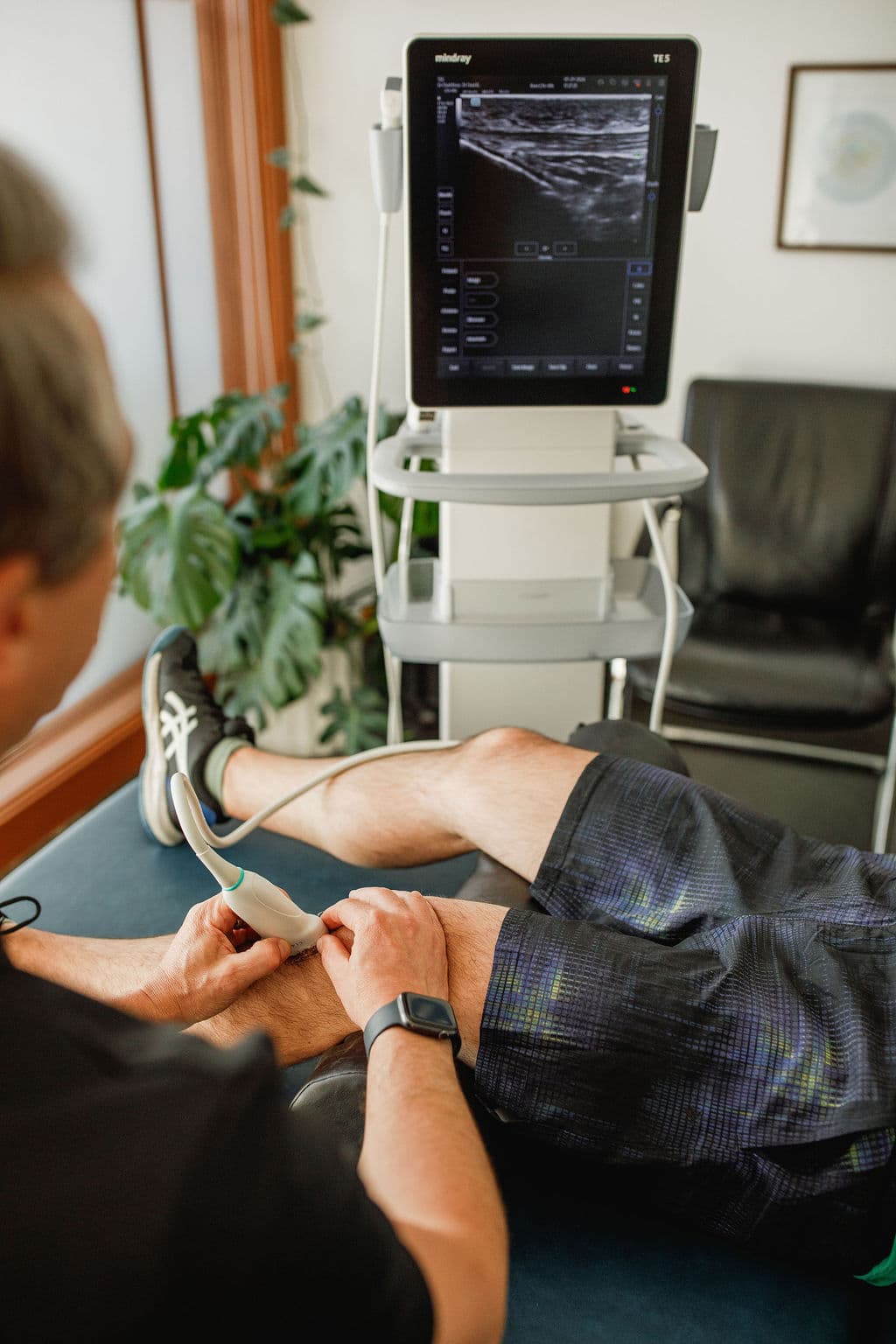
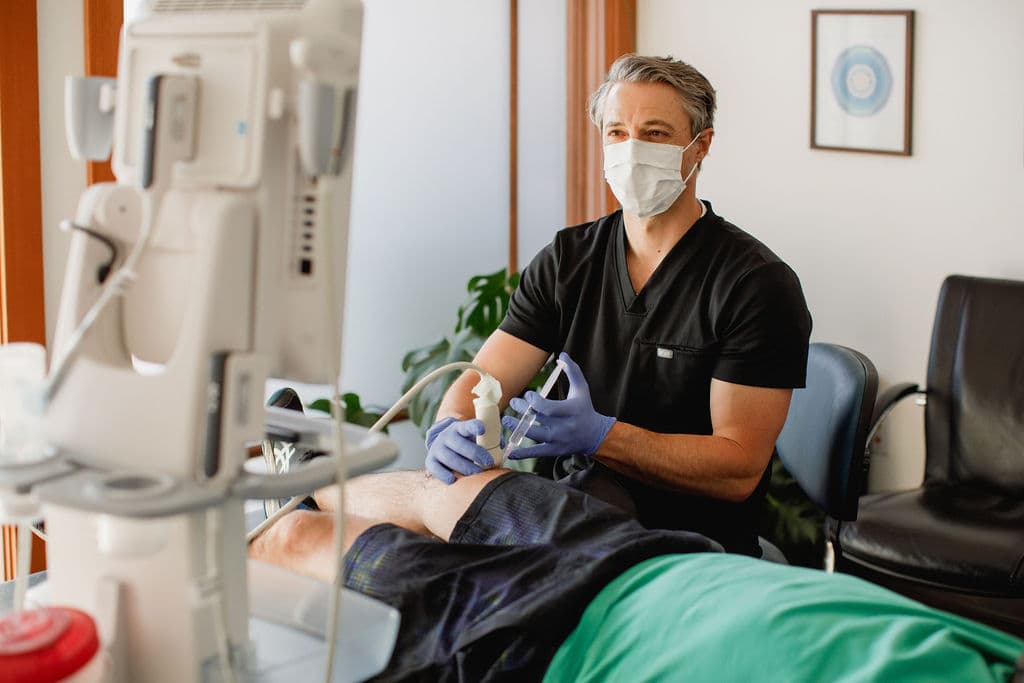
Dr. Borys trained extensively with the Hackett Hemwall Patterson Foundation, a leading organization in prolotherapy education, and uses ultrasound guidance to ensure precise injection placement. For a closer look at how the treatment is dosed and who tends to respond, see what prolotherapy is and when it's the right choice.
How Prolotherapy Works
Prolotherapy is intended to trigger a natural healing response in irritated or lax connective tissue, typically over a series of treatments.
Natural Inflammatory Response
Prolotherapy uses a targeted dextrose solution to prompt a local repair response in irritated or lax connective tissue.
Collagen Production
The inflammatory response is thought to stimulate fibroblasts to produce new collagen, a key building block of ligaments and tendons.
Tissue Strengthening
Over weeks to months, the goal is improved tissue tolerance, stability, and function, often across a series of sessions.
Benefits of Prolotherapy
Intended to stimulate a localized healing response
Non-surgical option for chronic connective tissue pain
Aims to address underlying ligament laxity and instability
Typically delivered as a series of treatments over time
Usually minimal downtime, though temporary soreness is common and activity guidance varies by treatment area
Long clinical history and supportive evidence for selected conditions
Conditions Treated with Prolotherapy
Prolotherapy is often considered for ligament laxity, joint instability, chronic sprains, and hypermobility-related connective tissue pain.
Evidence-Informed Research
Prolotherapy has been studied across several musculoskeletal conditions, with the strongest support in selected areas such as knee osteoarthritis, lateral elbow tendinopathy, medial elbow tendinopathy, sacroiliac and low back pain, and chronic tendinopathy. The studies below help show where the evidence is more established and where it is still evolving.
Dextrose Prolotherapy for Knee OA
Classic blinded RCT (Rabago et al., Ann Fam Med, 2013) showing sustained improvement in pain, function, and stiffness at 52 weeks versus saline and exercise.
Read on PubMedEfficacy of Prolotherapy for Osteoarthritis
Systematic review (Waluyo et al., 2023) pooling multiple trials and reporting favorable outcomes for prolotherapy in osteoarthritis, while noting that larger, higher-quality studies are still needed.
Read on PubMedProlotherapy for Tennis Elbow
Classic tendon RCT (Scarpone et al., 2008) showing improved elbow pain, grip strength, and extension strength in chronic lateral epicondylosis.
Read on PubMedProlotherapy for Tennis Elbow: Meta-Analysis
Systematic review and meta-analysis (Zhu, Rabago, Chung, Reeves, Wong, Sit, Arch Phys Med Rehabil, 2022) pooling trials of hypertonic dextrose injection for lateral elbow tendinosis, reporting improvements in pain and physical function.
Read on PubMedProlotherapy for Plantar Fasciitis
Plantar fasciitis randomized controlled trials summarized within the VA systematic review (Ewart et al., 2024), a common and website-relevant foot condition.
Read on PubMedProlotherapy vs Steroid for SI Joint Pain
RCT (Kim et al., 2010) comparing prolotherapy with steroid injection for sacroiliac joint pain, finding longer-lasting relief with prolotherapy — an encouraging early study that supports its role in spine and SI joint care.
Read on PubMedProlotherapy + Eccentric Loading for Achilles Pain
Randomized trial (Yelland et al., 2009) comparing eccentric loading exercises and prolotherapy alone and in combination. The combined group improved faster, though long-term scores were similar across groups — combined treatment may accelerate early recovery rather than producing a durable advantage over loading alone.
Read on PubMedProlotherapy for Chronic Tendinopathy: Scoping Review
Scoping review (Tognolo et al., Eur J Integr Med, 2022) mapping the evidence for dextrose prolotherapy across a range of chronic tendinopathies and highlighting its role within a comprehensive treatment approach.
View Study5% Dextrose Prolotherapy for Chondromalacia Patella
Randomized controlled trial (Bayir, Koroglu & Demir, PM&R, 2026) comparing 5% dextrose prolotherapy with saline injections for chondromalacia patella, supporting dextrose as an effective option for this common source of anterior knee pain.
Read on PubMedProlotherapy vs Epidural Steroid for Lumbar Pain
Pragmatic RCT (Wende, Reeves, Vishnevsky, Cheng & Rabago, PM&R, 2026) comparing prolotherapy directly with epidural steroid injections for lumbar pain with associated leg pain, reporting comparable outcomes between the two approaches in this common and challenging presentation.
Read on PubMedWhat to expect after treatment
Knowing what's normal afterward helps you support the healing response prolotherapy is meant to start.
Temporary soreness is expected
Because prolotherapy works by prompting a healing response, a few days of localized soreness, stiffness, or mild swelling at the treated area is normal and part of the process.
Ease off anti-inflammatories
Dr. Borys may advise limiting ice and NSAID pain relievers for a short window, since the goal is to allow the intended inflammatory response rather than suppress it. Acetaminophen is often suggested instead.
Gradual return to activity
A brief period of relative rest is usually followed by a progressive return to normal activity and any prescribed strengthening, which helps the treated ligaments and tendons adapt.
Results build over a series
Prolotherapy is typically delivered as a series of sessions spaced several weeks apart, with improvement accumulating gradually rather than after a single visit.
Is prolotherapy right for you?
Prolotherapy can help the right patient, but it isn't ideal for everyone. A consultation and exam help determine whether it fits your situation.
Prolotherapy may be a good fit if you
- Have chronic ligament or tendon pain, or joint instability, that has lasted months
- Have not gotten lasting relief from rest, activity modification, and physical therapy
- Are looking for a non-surgical option that aims to support tissue healing
- Can commit to a series of treatments and a supporting rehabilitation plan
Prolotherapy may not be ideal if you
- Have an acute, complete tendon or ligament rupture that may need surgical evaluation
- Have an active infection, or certain bleeding or immune conditions
- Are seeking a single-visit or instant fix rather than gradual improvement
- Have pain driven mainly by advanced structural damage better suited to other treatment
This list is a general guide, not medical advice. Dr. Borys will review your history, exam, and goals to recommend the most appropriate option for your condition.
Not sure if prolotherapy is right for you?
Schedule an initial evaluation to review your exam findings and treatment options.
What does it cost?
We believe in transparent pricing, so you can make an informed decision without pressure or surprises.
Most prolotherapy treatments fall in this range per session, depending on the areas treated.
How your cost is determined
Your exact cost is confirmed at your initial evaluation — which is a standard office visit that may be billed through insurance depending on your individual plan and coverage — before anything is scheduled.
The regenerative procedure itself is generally an out-of-pocket expense, since most plans still classify it as investigational. There are no hidden fees, and you will always know the cost before moving forward.
Prolotherapy — Bellingham, WA
Based in Bellingham, Dr. Borys sees patients from Whatcom County, Skagit County, the San Juan Islands, and surrounding Northwest Washington communities.
Prolotherapy: Common Questions
What is prolotherapy?
Prolotherapy is a regenerative injection treatment used for certain chronic ligament, tendon, and joint pain problems. A small amount of dextrose-based solution is injected into painful or weakened connective tissue to stimulate a local healing response. It is not a numbing injection — the goal is to support stronger, more stable tissue over a series of treatments.
What conditions can prolotherapy help with?
Prolotherapy may be considered for chronic ligament, tendon, and joint pain, including knee pain, low back pain, sacroiliac joint pain, shoulder pain, neck pain, hip pain, tennis elbow, and ankle instability. It may also help selected patients with mild to moderate osteoarthritis, particularly when pain is related to joint instability or poor tissue healing rather than advanced structural loss. Candidacy is determined after a proper history, exam, and imaging review.
How does prolotherapy work?
The injected solution creates a controlled stimulus in the treated tissue, prompting increased local blood flow, cellular activity, and tissue repair signaling. Over a series of sessions spaced several weeks apart, the treated ligaments, tendons, or joint-supporting structures can become better organized and more stable — which is often what reduces pain and improves function over time.
Is prolotherapy the same as PRP?
No. Both are regenerative injection treatments, but they use different solutions. Prolotherapy uses a dextrose-based solution. PRP uses a concentrated sample of the patient's own platelets drawn from a blood sample taken that day. PRP is often selected for more significant tendon injuries, cartilage problems, or cases where a stronger biologic stimulus is appropriate. Dr. Borys will recommend the better option based on your specific diagnosis.
How many treatments do I need, and how long does it take to work?
Most patients need a series of 3–6 sessions, spaced several weeks apart, though more chronic or complex problems may require a longer plan. Prolotherapy works gradually — some patients notice improvement within a few weeks, but meaningful change often develops over 6–12 weeks as the tissue response builds. Results are typically slower than a numbing injection, but may last longer when the underlying problem is being addressed.
Is prolotherapy painful, and what should I expect afterward?
A local anesthetic is typically used to numb the treatment area and improve comfort. Some pressure or discomfort may still be felt because prolotherapy targets sensitive ligaments, tendons, and joint-supporting tissues, but most patients tolerate the procedure well. Soreness, stiffness, or aching is common for several days afterward and is usually part of the expected healing response. Most patients can do light activity the same day, while strenuous exercise is limited for a short period.
What should I avoid after prolotherapy?
For the first several days after treatment, strenuous exercise, heavy lifting, high-impact activity, and aggressive stretching are generally avoided. Anti-inflammatory medications such as ibuprofen or naproxen are also typically avoided around the time of treatment, as they may interfere with the healing response prolotherapy is intended to stimulate. Specific instructions are reviewed at your appointment.
Is prolotherapy safe, and who should not get it?
Prolotherapy is generally considered safe when performed by a trained clinician using appropriate technique and ultrasound guidance. Common side effects include temporary soreness, stiffness, bruising, or swelling. It may not be appropriate for patients with active infection, uncontrolled inflammatory disease, certain bleeding disorders, or pain primarily caused by severe structural damage that warrants surgical evaluation. Candidacy is reviewed during your consultation.
How long do prolotherapy results last?
Results vary depending on the condition, severity, tissue quality, and whether contributing factors such as movement patterns or loading habits are also addressed. Some patients experience long-lasting improvement, especially when treatment is combined with strengthening and rehabilitation. Prolotherapy does not prevent future injury or arthritis progression — the goal is durable improvement, not a guaranteed permanent cure.
Does insurance cover prolotherapy, and is it available in Bellingham?
Prolotherapy is generally a non-covered service and is paid out of pocket. The initial evaluation is a standard office visit that may be billed through insurance depending on your individual plan and coverage, and includes a thorough history and exam to understand what is driving your pain.
Dr. Borys offers prolotherapy in Bellingham, WA for selected ligament, tendon, and joint pain conditions. The initial visit helps determine whether prolotherapy is a good fit for your situation.
Still have questions? Browse all FAQs
Ready to find out whether prolotherapy is right for your joint pain?
It starts with an initial visit to discuss whether prolotherapy is the right option for your condition — a standard medical evaluation that may be billed through insurance depending on your individual plan and coverage.