Nerve Hydrodissection
Ultrasound-guided treatment for selected peripheral nerve entrapments — a precise, nonsurgical approach intended to improve nerve mobility and reduce chronic nerve-related pain.
Book an initial visitWhat is Nerve Hydrodissection?
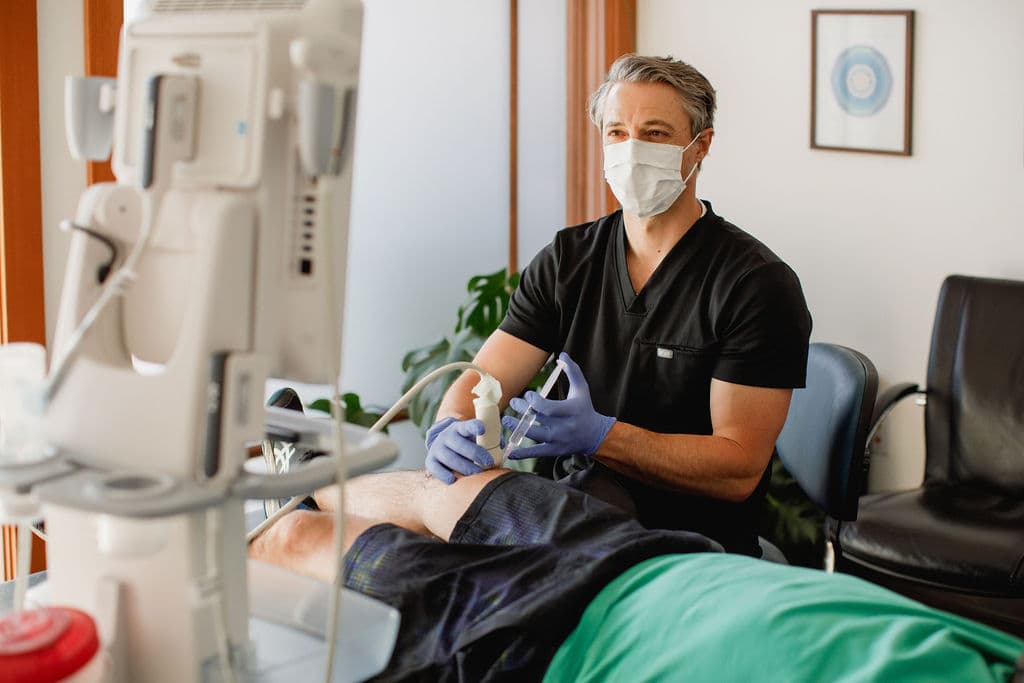
Nerve hydrodissection is an ultrasound-guided procedure that uses a carefully injected fluid to mechanically separate a compressed or entrapped nerve from the surrounding tissue. Nerves are meant to glide freely — but scar tissue, fascial thickening, trauma, or anatomical structures can tether a nerve in place, causing pain, numbness, tingling, or weakness.
Using real-time diagnostic ultrasound, Dr. Borys precisely identifies the site of entrapment and guides the needle to the exact location along the nerve. A gentle stream of fluid is then injected around the nerve to separate it from surrounding tissue planes and reduce mechanical irritation — a nonsurgical option that does not require cutting or general anaesthesia.
The solution is typically a buffered dextrose or saline-based preparation selected to gently separate tissue planes and support a less irritated nerve environment once the mechanical compression is relieved.
How the Procedure Works
Each step is performed in real time under ultrasound guidance, ensuring precision and safety.
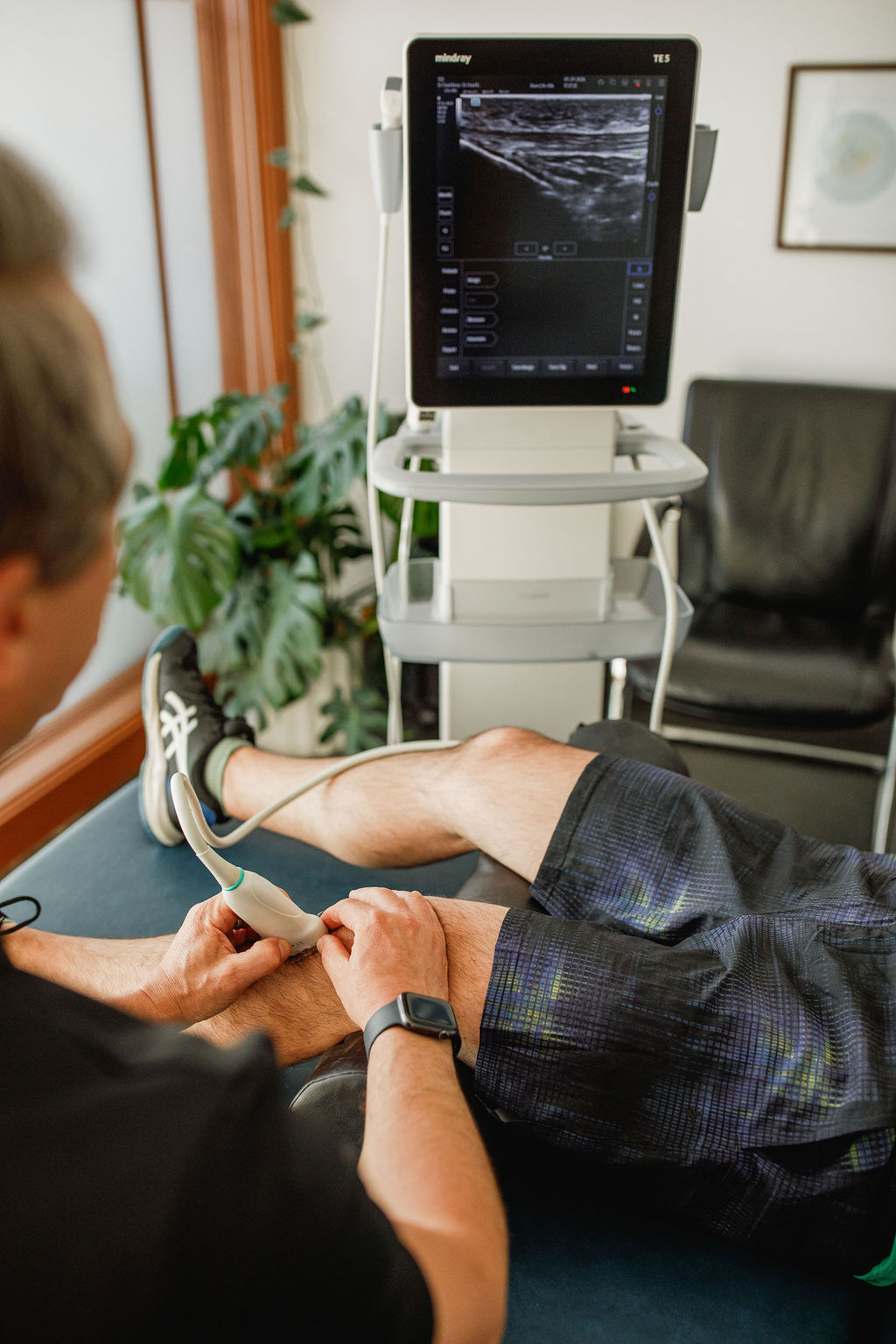
Ultrasound Identification
The affected nerve is precisely located using real-time diagnostic ultrasound, allowing Dr. Borys to visualize the entrapment site and guide the needle with accuracy.
Hydrodissection
A gentle stream of fluid — typically a buffered dextrose or saline solution — is injected around the nerve to separate it from surrounding tissue planes and reduce mechanical irritation.
Nerve Recovery
The goal is to reduce mechanical irritation around the nerve and restore its ability to glide more normally as the area settles.
Why nerve entrapment can be easy to miss
Symptoms often show up away from the actual restriction. Pain, tingling, numbness, or weakness may be felt down the arm or leg even when the problem is higher along the nerve path. Where it adds useful information, diagnostic ultrasound can help identify whether a peripheral nerve is restricted and whether hydrodissection is a reasonable option.
A nonsurgical option
Hydrodissection aims to relieve nerve compression without the incision, anesthesia, and typical recovery period of an open procedure. The treatment takes only minutes and can be repeated as needed.
It can also be combined with PRP or prolotherapy to address associated tissue damage or joint instability contributing to the entrapment.
Hydrodissection vs. Perineural Injection Therapy
Both are nerve-targeted treatments, but they work in different ways and address different types of nerve pain.
Benefits of Nerve Hydrodissection
Targets entrapped nerves directly under ultrasound guidance
Nonsurgical alternative for nerve compression conditions
Releases nerve adhesions and scar tissue mechanically
Creates a less irritated environment around the freed nerve
Minimal downtime — procedure takes only minutes
Can be combined with PRP or prolotherapy when clinically appropriate
Conditions Treated
Nerve entrapment can affect any peripheral nerve. Common presentations treated with hydrodissection include:
Evidence-Informed Research
Nerve hydrodissection is supported by a growing body of clinical research across a range of entrapment neuropathies.
Perineural Dextrose for Carpal Tunnel
Prospective, randomized, double-blind RCT (Wu et al., Mayo Clin Proc, 2017) demonstrating 6-month sustained benefit of 5% dextrose injection for carpal tunnel syndrome.
Read on PubMedDextrose vs Corticosteroid for Carpal Tunnel
Randomized double-blind clinical trial (Wu et al., Ann Neurol, 2018) comparing 5% dextrose and triamcinolone perineural injections, with dextrose showing favorable longer-term outcomes.
Read on PubMedPerineural Dextrose for Upper Limb Compression Neuropathies
Systematic review and meta-analysis (Azizi et al., Heliyon, 2025) confirming the effectiveness of perineural dextrose injection across peripheral compression neuropathies of the upper limbs.
Read on PubMedHydrodissection of Cervical Nerve Roots
Ultrasound-guided nerve hydrodissection study (Lin, Yen & Wu, Sci Rep, 2023) demonstrating meaningful pain and function improvements in cervical radiculopathy.
Read on PubMedPerineural Dextrose for Ulnar Neuropathy at the Elbow
Randomised, controlled, double-blind study evaluating perineural dextrose injection for ulnar neuropathy at the elbow, supporting hydrodissection as an effective conservative option for cubital tunnel syndrome.
Read on PubMedRelated conditions
Nerve Hydrodissection: Common Questions
What is nerve hydrodissection?
Nerve hydrodissection is an ultrasound-guided procedure that uses a precise injection of fluid around an entrapped or compressed peripheral nerve. The fluid gently separates the nerve from the surrounding tissue or scar that is squeezing it, potentially improving the nerve’s natural ability to move and helping reduce chronic nerve pain — without surgery.
What conditions does nerve hydrodissection treat?
Nerve hydrodissection is used for carpal tunnel syndrome, cubital tunnel syndrome, and other selected peripheral nerve entrapments or neuropathic pain syndromes where a nerve is being pinched or restricted.
How is nerve hydrodissection different from surgery?
Unlike open surgical release, nerve hydrodissection is performed through a needle using real-time ultrasound guidance, with no incision. This means it is non-surgical, typically has minimal downtime, and can be an option for patients who want to avoid or delay surgery.
Does nerve hydrodissection hurt?
Most patients tolerate the procedure well. Ultrasound guidance and a local anesthetic help keep it comfortable, and some patients feel relief of nerve symptoms relatively quickly. Mild soreness at the injection site afterward is normal.
How many hydrodissection treatments are needed?
The number of treatments depends on the nerve involved, how long it has been compressed, and how you respond. Dr. Borys evaluates your symptoms with diagnostic ultrasound and recommends a personalized plan — call (360) 738-3230 to discuss your situation.
Nerve hydrodissection in Bellingham, WA
Dr. Borys performs ultrasound-guided nerve hydrodissection at his clinic in Bellingham, serving patients from Whatcom County, Skagit County, and the San Juan Islands. Real-time ultrasound imaging allows him to visualize the nerve, confirm the site of compression, and guide the needle with precision — making image guidance essential rather than optional for this procedure.
Many patients arrive having already been offered surgery or having had limited relief from standard conservative care. An initial evaluation includes a full history, physical examination, and ultrasound assessment before any treatment is recommended.