Low back pain treatment in Bellingham, WA
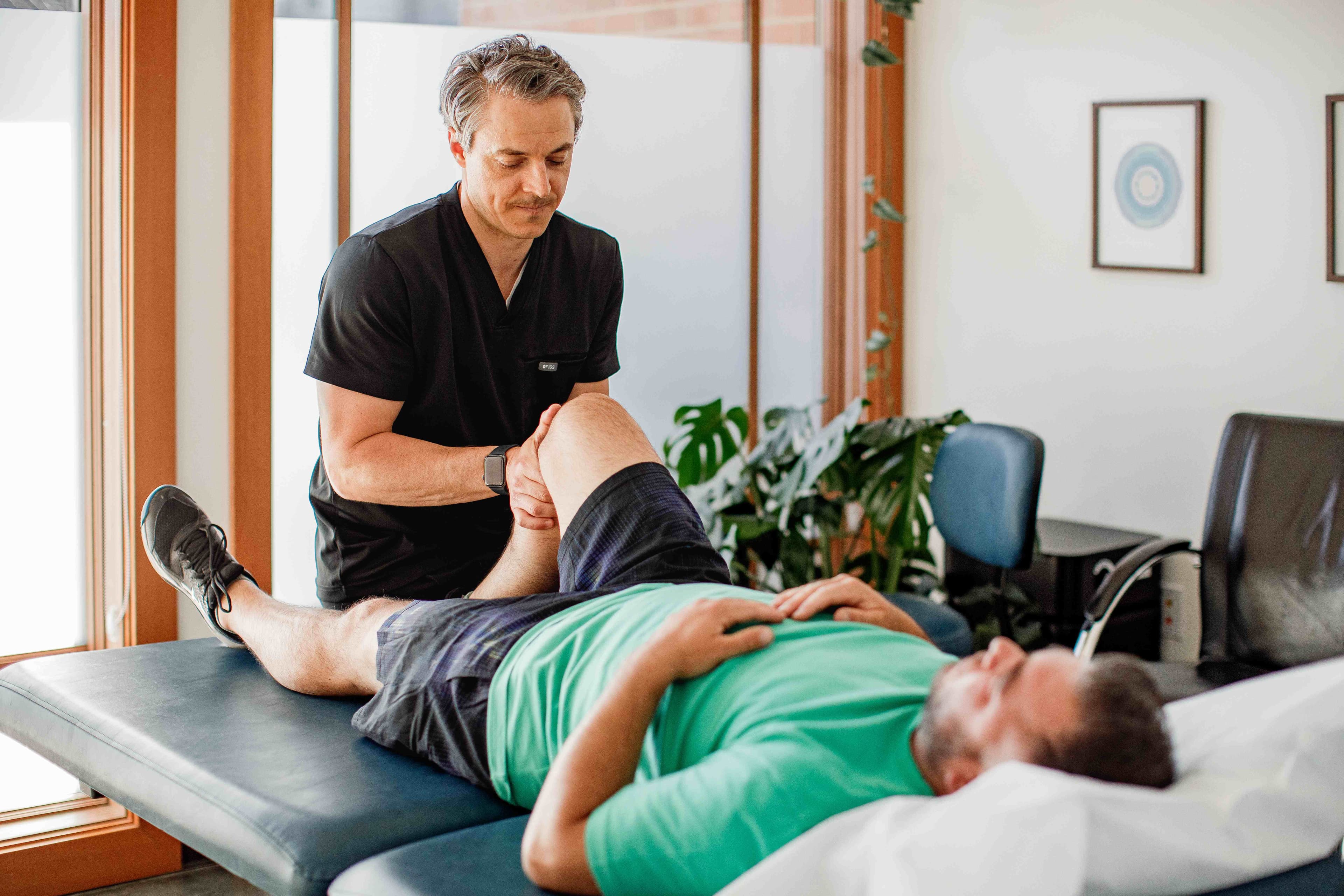
Chronic low back pain has many sources — facet joints, ligaments, paraspinal tissue, or a combination. Dr. Borys works to clarify what is driving it, then applies PRP, prolotherapy, or shockwave to that structure, without surgery.
Book an initial visitChronic low back pain that keeps coming back — and what to do about it
Most people with chronic low back pain have already done the right things: rest, physical therapy, maybe a cortisone injection or two. The cortisone helped for a while, then stopped. The physical therapy helped with some things but not the underlying pain. And the MRI shows “degenerative changes” without telling you what is actually causing the problem.
The back has a lot of structures that can generate pain — the small joints at each vertebral level (facet joints), the ligaments connecting them, and the surrounding soft tissue. Often several are involved. The pattern of your pain — when it worsens, what movements provoke it, whether it stays local or spreads into the buttocks or thigh — gives Dr. Borys a clear picture of which structures are driving it before any treatment begins.
PRP, prolotherapy, and shockwave each work differently, and the right choice depends on what is found on exam and, when appropriate, diagnostic ultrasound. The goal is not to suppress pain temporarily — it is to address the tissue that is generating it.
“Degenerative changes” is not a diagnosis — it is a description
Most people who come in with chronic back pain have an MRI in hand that shows “degenerative changes” or “age-related findings” — and nobody has explained what that means for their specific pain, or whether it is even the cause. Degenerative findings are extremely common on imaging, often present in people with no pain at all. The scan shows structure; it does not identify what is hurting.
The goal of the first visit is to determine whether the facet joints are a likely contributor — not to treat the scan.
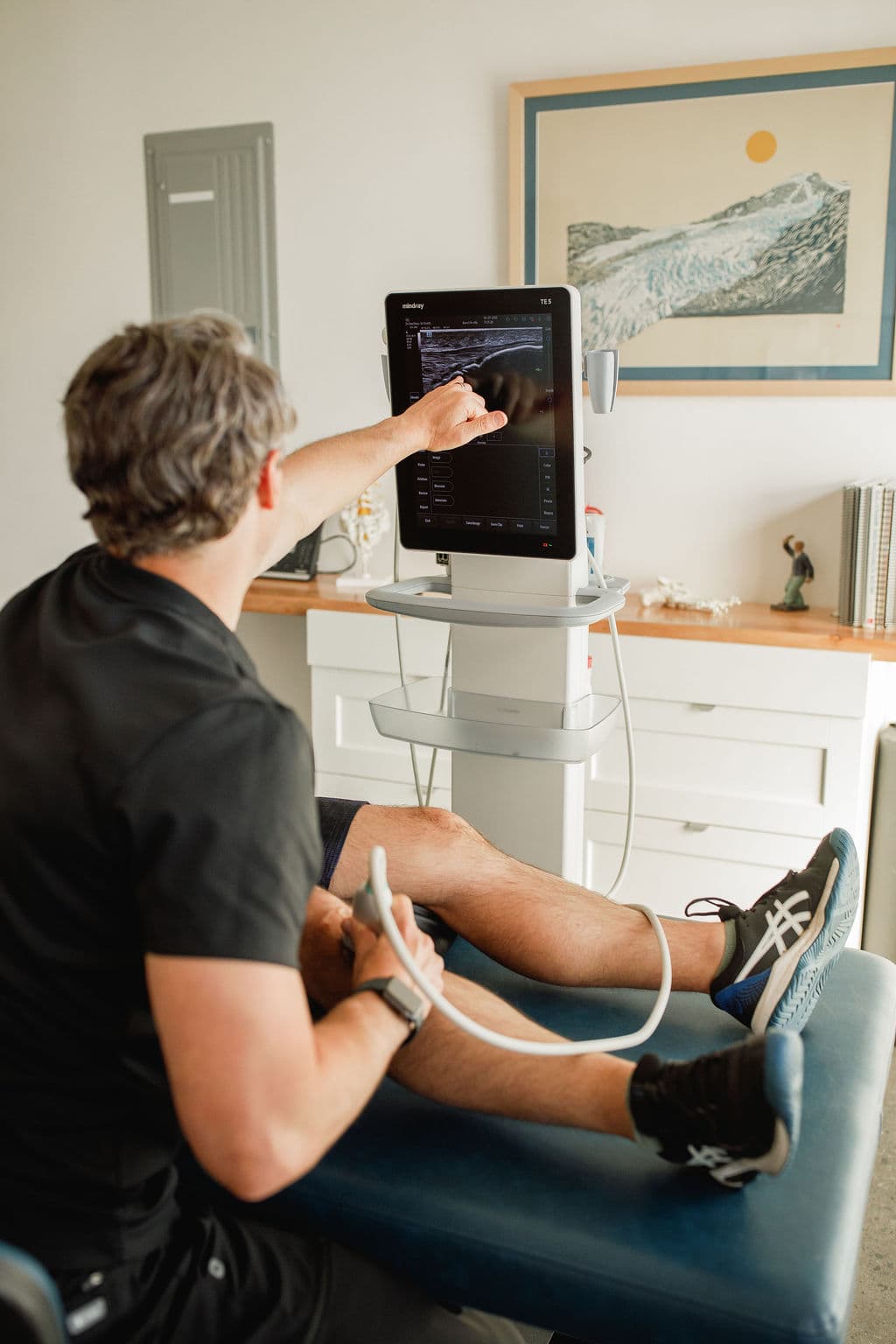
Dr. Borys uses a detailed history and hands-on exam to identify which structures are driving your pain. Diagnostic ultrasound is added when it helps confirm the target before any injection is placed.
Why patients consider this when nothing else has held
For back pain that has cycled through physical therapy and cortisone without lasting results, regenerative care offers something different: treatment directed at the tissue itself rather than temporary suppression of symptoms.
Find out what is actually causing your back pain before committing to any treatment
Have chronic low back pain that has not improved despite physical therapy or cortisone injections
Had a cortisone injection that provided temporary relief but the pain returned
PRP shows more durable benefit than cortisone in the RCT data — the advantage builds over time rather than fading
Have facet-pattern pain confirmed on examination — axial low back pain that worsens with extension and rotation
Want a non-surgical option supported by clinical trial data before considering more invasive procedures
Where these treatments fit: conservative care comes first
Regenerative injections and shockwave are not the first line for low back pain. A structured rehab program should come first — and many patients improve without any procedure.
Rehab is still first — but it has a limit
Core stabilization and lumbar rehab is the right starting point for most chronic back pain, and many patients improve substantially with a well-supervised program. Regenerative options earn their place when months of consistent rehab and activity modification have not held — or when cortisone has given temporary relief that keeps fading. If your back has already had a real trial of conservative care, continuing to wait tends not to reverse the underlying condition. Dr. Borys reviews what you have already tried and recommends a next step only when it genuinely makes sense.
Structured rehabilitation (the right starting point)
Core stabilization, lumbar mobility work, and gradual progressive loading address the movement and load-bearing deficits that often drive chronic back pain. Many patients improve significantly with a consistent, well-supervised program.
Activity modification
Identifying and reducing the specific movements or postures that provoke your pain — whether that is sustained flexion, extension, rotation under load, or prolonged sitting — gives the irritated tissue a chance to settle while strength is rebuilt.
Supportive care
Posture guidance, ergonomic adjustments, and sleep position changes reduce cumulative load on the posterior spinal elements and support recovery.
Regenerative options when conservative care stalls
When back pain has persisted despite months of consistent rehab and activity modification — or cortisone injections that helped briefly then faded — PRP, prolotherapy, or shockwave directed at the specific pain generator becomes a reasonable next step.
Non-surgical options for low back pain
When conservative care has not resolved your back pain, Dr. Borys matches the treatment to your exam and presentation. PRP is often the first option considered, with prolotherapy and shockwave available when they fit better.
PRP injections
Concentrated growth factors from your own blood are placed precisely into the structures driving your pain. In the RCT data, PRP shows more durable benefit than corticosteroid over time — the advantage builds rather than fades.
Learn more about PRP therapyProlotherapy
A dextrose-based solution injected into the facet joints and posterior ligaments to stimulate a localized healing response. Particularly useful for cases involving ligamentous laxity contributing to instability and pain, delivered as a short series.
Learn more about prolotherapyShockwave therapy (ESWT)
Acoustic pressure waves applied to the paraspinal musculature and posterior soft tissue. A 2023 meta-analysis of 12 RCTs found ESWT significantly improved pain and lumbar function at 4 and 12 weeks. No injection required, brief activity modification, most patients return to light activity the same day.
Learn more about shockwave therapyWhat to expect after treatment
PRP and prolotherapy for facet pain are measured in months, not days. Knowing what each phase looks like prevents abandoning the treatment before it has had time to work.
Post-injection soreness
Increased aching or stiffness in the lower back for up to a week is expected following a facet joint injection — it is the inflammatory response the treatment is designed to trigger. Keep activity to a tolerable level.
Activity as tolerated: if pain is above a 2 out of 10, ease back. Avoid NSAIDs — they blunt the healing response PRP and prolotherapy depend on.
The quiet phase
The initial soreness settles but meaningful improvement may not be apparent yet. The joint environment is remodeling. Feeling close to your pre-injection baseline is normal and expected at this stage.
Check-in and possible repeat
Dr. Borys routinely follows up at 6 weeks to assess the response. Depending on how the back is responding, a repeat injection or adjunct treatment may be appropriate at this visit.
Continued improvement
Improvement tends to be gradual and cumulative rather than sudden. Most patients notice continued progress over several months. Dr. Borys reviews the response and adjusts the plan as needed.
Some post-injection soreness is expected and is part of the healing response. Avoid NSAIDs during the treatment period — they suppress the inflammatory cascade PRP and prolotherapy depend on. Light movement is fine; return to loading follows Dr. Borys's specific guidance.
Is this treatment right for your back pain?
These options work well for the right presentation, but not all low back pain originates in the facet joints. A consultation and exam clarify whether this is the right approach for your situation.
This may be a good fit if you
- Have chronic low back pain that has not resolved with rest, physical therapy, or medication
- Have back pain that worsens with specific movements, prolonged positions, or loading — and want to know why
- Have had temporary relief from cortisone injections that faded, and want a more durable option
- Have imaging showing facet arthritis, ligamentous changes, or posterior element involvement
- Are not a surgical candidate or want to exhaust non-surgical options before considering surgery
What the evidence shows
A 2023 PRISMA systematic review of 13 RCTs rated the evidence for PRP in low back pain as Grade II — moderate, growing, and with a low adverse event profile. Key studies are linked directly so you can read them.
Systematic review of PRP for low back pain — Level II evidence
PRISMA systematic review (Machado et al., Biomedicines 2023) of 13 RCTs and 27 non-randomized trials covering 2,673 patients. Found Grade II evidence supporting PRP for facet, epidural, and discogenic LBP targets, with a low incidence of adverse events across all injection routes. Of the 13 RCTs, 11 found PRP favorable vs. control.
Read on PubMedPRP vs corticosteroid for lumbar facet pain — 6-month RCT
RCT (Wu et al., 2017) of 46 patients comparing intra-articular PRP to betamethasone for lumbar facet syndrome. Corticosteroid group had higher early satisfaction rates, but PRP group showed continued improvement over time with lower VAS and ODI scores at 6 months (VAS: 2.7 vs. 4.5; ODI: 29.4 vs. 44.1). No adverse events in either group.
Read on PubMedPRP vs hyaluronic acid for lumbar facet pain — 18-month RCT
RCT (Byvaltsev et al., 2019) of 144 patients with facet joint pain comparing PRP to hyaluronic acid. Both groups improved significantly; the PRP group showed superior clinical improvement and higher patient satisfaction at 18 months (VAS: 1.0 vs. 1.7; ODI: 6.5 vs. 14). Low risk of bias on RoB II assessment.
Read on PubMedShockwave therapy for chronic low back pain — meta-analysis of 12 RCTs
2023 meta-analysis of 12 randomized controlled trials finding ESWT significantly improved pain intensity and lumbar function at both 4 and 12 weeks compared to control groups. No serious adverse effects reported.
Read on PubMedrESWT vs anti-inflammatory medication for chronic nonspecific low back pain
Prospective RCT (Guo et al.) of 140 patients comparing radial extracorporeal shockwave therapy to a combination of NSAID and muscle relaxant for chronic nonspecific low back pain. Both groups improved significantly across pain and disability scores at 12 weeks; the shockwave group showed lower pain scores than the medication group at weeks 3 and 4, with no serious adverse events.
Read on PubMedLumbar Facet Pain Treatment: Common Questions
What causes lumbar facet pain?
The lumbar facet joints are the small joints on the back of the spine that connect one vertebra to the next. When these joints become inflamed, irritated, or wear down, they can trigger low back pain that may radiate into the buttocks or upper thigh. Facet pain is often worsened by extension (bending backward) or by staying in one position for too long.
How is facet pain different from disc pain?
Facet pain comes from the small joints on the back of the spine and is typically triggered by extension and rotational movements. Disc-related pain often comes from the center (discogenic) or from a disc bulge pressing on a nerve root. The distinction matters because the treatment approach is different. Dr. Borys uses history, exam, and ultrasound to find out which structure is actually driving your pain.
Do I need imaging before facet treatment?
Not always. Your history and physical exam often point clearly to the facet joints. However, MRI or X-ray can confirm arthritis or disc changes and rule out other causes. Diagnostic ultrasound can also help identify inflamed facet joints and guide where to place the injection. Dr. Borys reviews your situation and recommends imaging if it will change the plan.
What is PRP for lumbar facet pain?
PRP injections deliver concentrated growth factors from your own blood directly into the inflamed facet joint under ultrasound guidance. The goal is to reduce inflammation and support the joint’s natural healing response. In RCT data, PRP for lumbar facet pain shows more durable benefit than cortisone injections over time.
Is prolotherapy effective for low back pain?
Prolotherapy works best when the problem includes ligamentous laxity or instability contributing to facet irritation. It involves a series of injections of a dextrose solution to stimulate the body’s natural healing response. For appropriately selected patients with facet-related low back pain, prolotherapy has supportive evidence and a long clinical history.
Find out if your back pain is coming from the facet joints
Dr. Borys reviews your history, performs a focused exam, and gives you a clear picture of what is driving your pain and which options genuinely fit your situation.
The information on this page is for general educational purposes only and is not individual medical advice. It is not a substitute for a consultation with a qualified provider. Whether a treatment is appropriate depends on your individual evaluation, and individual results vary.