PRP for Tennis Elbow in Bellingham, WA
Lifting a coffee cup or turning a doorknob shouldn't light up the outside of your elbow. When it has for months — through rest, a strap, and physical therapy — PRP targets the tendon itself, with research showing better, longer-lasting results than a cortisone shot at one to two years.
Book an initial visitCan PRP help tennis elbow?
Bottom line
For chronic tennis elbow that hasn't improved with rest, bracing, and physical therapy, PRP is a strong non-surgical option — and the evidence backs it up. Multiple randomized trials show better, longer-lasting relief than a cortisone shot by one to two years. It works gradually, targeting the tendon itself, and helps most in long-standing cases rather than a brand-new strain.
Tennis elbow (lateral epicondylitis) develops when the common extensor tendon on the outer elbow becomes overloaded and degenerates, leading to pain with gripping, lifting, and wrist movement. Despite the name, most cases have nothing to do with tennis — they come from repetitive gripping and forearm use.
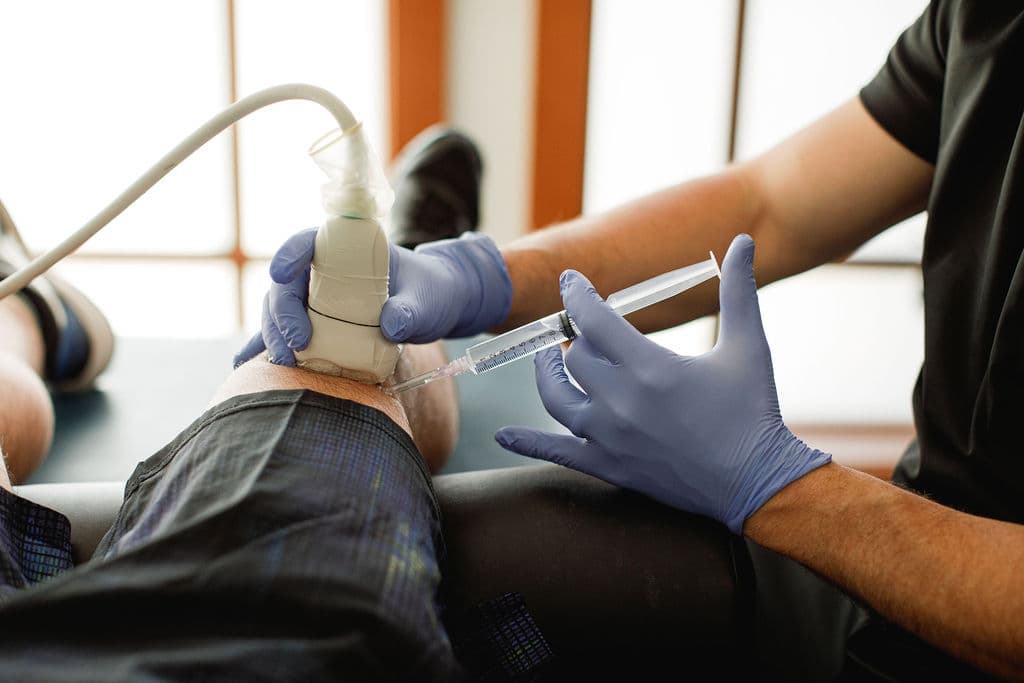
Platelet-Rich Plasma (PRP) therapy concentrates the platelets and growth factors from a small sample of your own blood and delivers them directly into the injured tendon under ultrasound guidance. The goal is to stimulate a genuine healing response in a tendon that, on its own, often heals slowly and incompletely.
PRP is not a one-session solution and is not right for every elbow. It tends to help most in chronic tendon problems that have not responded to conservative care. Whether it is a reasonable option depends on your history and exam.
Tendons that stay in a degenerative state without intervention often don't self-resolve — and repeated cortisone shots, while fast-acting, are associated with tendon weakening over time. For a stubborn elbow that has already failed standard care, earlier action tends to mean a shorter recovery.
Why patients consider PRP for tennis elbow
For chronic tennis elbow, PRP offers something most treatments don't: a way to target healing in the tendon itself — with durable outcomes in the trials that have followed patients longest.
Grip something again without wincing — door handles, a steering wheel, a coffee cup
Return to the sport, instrument, or trade that has been off-limits for months
Break the cycle of temporary cortisone relief that keeps wearing off
Targets the tendon directly — an option when PT and cortisone have not produced lasting improvement
Uses your own biology with no incision — brief activity modification and usually no meaningful downtime, with most patients back to light activity the same day
A well-studied option for exactly this condition when PT and rest haven’t been enough
Where PRP fits: conservative care comes first
PRP is not the first thing to try for tennis elbow. For most people, a structured, non-invasive plan should come first — and many elbows improve without any injection. PRP is best considered when those steps haven't worked.
PRP is for the elbow that has already tried everything else
Load management, structured wrist-extensor strengthening, and a counterforce brace are the right first steps — and many elbows improve with them. PRP earns its place when those months of consistent effort haven't produced lasting relief. A 2025 head-to-head trial of 231 patients confirmed PRP delivered the largest functional gains at two years over physical therapy, shockwave, and prolotherapy. If that describes where you are, it's worth having a conversation about what the exam actually shows.
What to expect after a tennis elbow PRP injection
PRP for tennis elbow is measured in months, not days. Here is what the weeks in between actually look like.
Post-injection soreness
Increased aching or tenderness at the outer elbow for up to a week is expected — the injection triggers an acute inflammatory response in the tendon. Reduce activity to keep discomfort manageable; strict rest is not required.
Activity as tolerated: if pain is above a 2 out of 10, ease back. Avoid ibuprofen and all NSAIDs — they blunt the healing response PRP depends on.
The quiet phase
Initial soreness settles, but meaningful improvement has typically not arrived yet. The tendon is remodeling. Feeling close to baseline but not better is normal at this stage — and the phase that most often prompts patients to lose confidence prematurely.
Return to gripping, racket sports, or repetitive lifting during this window is the most common setback.
Early improvement
Most patients begin noticing reduced pain with gripping and lifting. A gradual, guided return to the activities that previously provoked symptoms typically begins around week four to six.
Full response window
Tendon effects take 3–4 months to be fully appreciated. The research trials showing PRP outperforming cortisone measured outcomes at 6, 12, and 24 months — that is the relevant timeframe. Dr. Borys reassesses at three months to review progress.
Tennis elbow PRP typically requires a single injection for most patients who have not had previous procedures.
Is tennis elbow PRP right for you?
PRP tends to help most in chronic cases that have outlasted conservative care — not every elbow qualifies. A consultation and exam help determine whether it makes sense for yours.
Tennis elbow PRP may be a good fit if you
- Have chronic tennis elbow (lateral epicondylitis) that has lasted months
- Have not had lasting relief from rest, bracing, physical therapy, or other conservative care
- Want a non-surgical option that uses your own biological material
- Can allow several weeks to months for a gradual response
Less likely to be appropriate if you
- Have a brand-new strain that may still respond to rest and rehab
- Need immediate or guaranteed pain relief
- Have an active infection, certain blood or platelet disorders, or active cancer
- Cannot pause anti-inflammatory medications when advised
This list is a general guide, not medical advice. Dr. Borys will review your history, exam, and goals to recommend the most appropriate option for your elbow.
If that sounds like your elbow, it's worth a conversation.
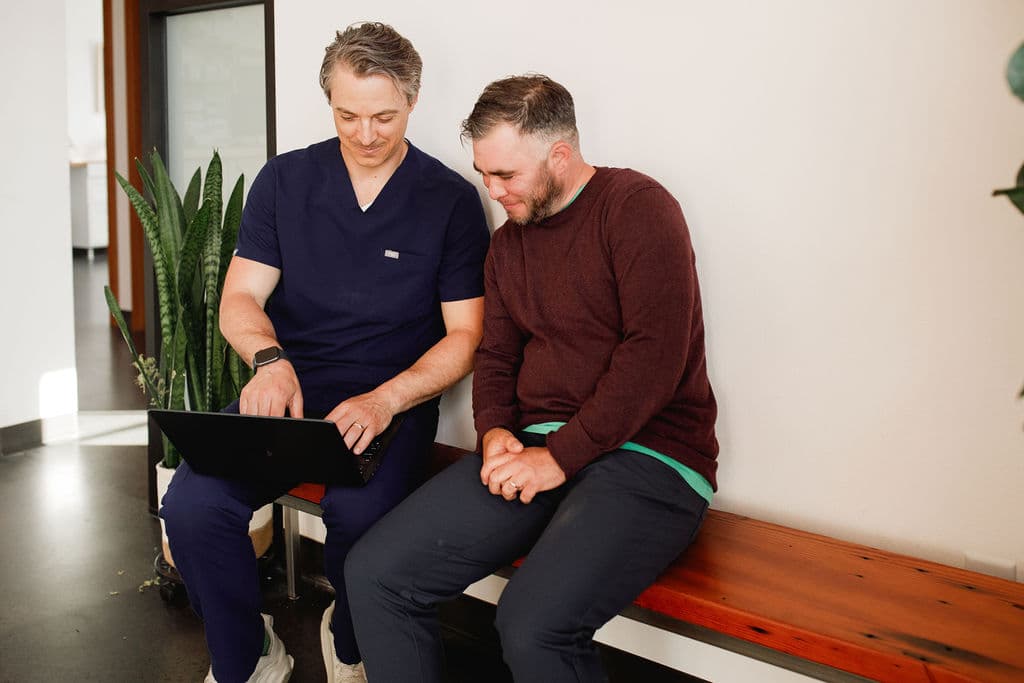
An initial evaluation covers your history, exam, and what options actually make sense for where you are.
The research on PRP for tennis elbow
Tennis elbow is one of the better-studied uses of PRP. Multiple randomized trials show that while steroids often relieve pain faster in the first few weeks, PRP provides better and more durable results by one to two years. A 2025 head-to-head trial of 231 patients found PRP produced the largest functional gains at two years — outperforming physical therapy, shockwave, and prolotherapy.
PRP vs. Corticosteroid — 1-Year RCT
Double-blind RCT (Peerbooms et al., Am J Sports Med, 2010) comparing PRP with corticosteroid injection for lateral epicondylitis — PRP showed greater and more lasting improvement in pain and function at one-year follow-up.
Read on PubMedDurable Benefit at 2 Years
Two-year follow-up of the same cohort (Gosens et al., Am J Sports Med, 2011) found the advantage of PRP over corticosteroid for tennis elbow was maintained over the longer term.
Read on PubMed230-Patient Multicenter Trial
Double-blind, multicenter RCT of 230 patients (Mishra et al., Am J Sports Med, 2014) found PRP produced significant improvement in chronic tennis elbow pain and tenderness at 24 weeks compared with an active control.
Read on PubMedPRP vs. PT, Shockwave & Prolotherapy
Randomized trial of 231 patients with chronic tennis elbow (Lhee et al., Am J Sports Med, 2025) found that at two years PRP produced the largest improvement in arm function (DASH), with prolotherapy also outperforming physical therapy and shockwave — while every group still improved.
Read on PubMedWhat the evidence does — and doesn't — show
As with other PRP uses, results vary and preparations differ between studies, so the research isn't perfectly uniform. The most consistent finding is the pattern over time: corticosteroid injections often relieve tennis elbow pain quickly but tend to relapse, while PRP works more slowly and tends to deliver more durable relief by 6–12 months and beyond.
The practical takeaway: PRP is not a guaranteed cure and isn't right for every elbow — it tends to help most in chronic tendon problems that haven't responded to conservative care — but a well-prepared injection placed accurately under ultrasound guidance gives a stubborn tendon the best chance to heal. Whether your elbow is a good candidate comes down to what the exam and ultrasound show.
PRP vs. Cortisone for Tennis Elbow
Patients often ask whether they should just get a cortisone shot for tennis elbow. It's a fair question — and the honest answer comes down to short-term relief versus long-term healing.
What a cortisone shot does
A corticosteroid injection is anti-inflammatory and can ease tennis elbow pain quickly — often within days. The trade-off is that the relief is usually short-lived, recurrence is common, and repeated steroid injections may weaken the tendon over time rather than help it heal.
How they compare over time
In randomized trials comparing the two for tennis elbow, cortisone tends to win in the first few weeks, but PRP catches up and surpasses it by several months — with better, more durable pain and function scores at one and two years.
Tennis elbow treatment — Bellingham, WA
Based in Bellingham, Dr. Borys sees patients from Whatcom County, Skagit County, the San Juan Islands, and surrounding Northwest Washington communities.
Related conditions
Golfer's elbow
Medial elbow tendinopathy — same treatment approach, opposite side of the joint.
Rotator cuff tendinopathy
Shoulder tendon pain with overlapping regenerative treatment options including PRP and shockwave.
Shockwave therapy
Non-invasive acoustic-wave treatment — often used alongside PRP for chronic tendon conditions including tennis elbow.
PRP therapy
Learn how platelet-rich plasma works, what the preparation involves, and which conditions have the strongest evidence.
PRP for Tennis Elbow: Common Questions
Does PRP actually work for tennis elbow?
For chronic tennis elbow that has not responded to rest, bracing, and physical therapy, the research is encouraging. Several randomized controlled trials have found that PRP can produce meaningful, durable improvements in pain and grip strength — in some studies outperforming corticosteroid injections at one and two years, even though steroids often feel better in the first few weeks.
PRP works gradually by supporting the tendon’s own healing response rather than simply masking pain. It tends to help most in long-standing (chronic) tendon problems rather than a brand-new strain. Dr. Borys reviews your symptoms, exam, and ultrasound findings to give you an honest assessment of whether PRP is a reasonable option for your elbow.
How is PRP different from a cortisone shot for tennis elbow?
They work in opposite ways. A cortisone (corticosteroid) injection is anti-inflammatory and can ease pain quickly, but the relief is usually short-lived, and repeated steroid injections may weaken the tendon over time and are associated with higher recurrence.
PRP works more slowly because it aims to support tendon healing rather than suppress inflammation. Randomized trials comparing the two for tennis elbow have found that, while cortisone may win in the first few weeks, PRP tends to provide better and more durable results by 6–12 months and beyond. Dr. Borys helps you weigh which approach fits your situation.
How many PRP injections will my elbow need?
Many tennis elbow cases respond to a single, accurately placed PRP injection, though some patients benefit from a second treatment depending on how the tendon responds.
The right plan depends on how chronic and severe the tendon changes are on exam and ultrasound. Dr. Borys reassesses your progress over the following weeks and recommends a repeat injection only if it is likely to add meaningful benefit.
How soon will my elbow feel better, and how long does it last?
PRP is a gradual process, not an instant fix. Mild soreness at the elbow for a few days afterward is normal and is part of the healing response. Many patients begin noticing clearer improvement around 4–8 weeks, with continued gains over three to six months as the tendon heals.
When PRP is effective for tennis elbow, the benefit is often durable — randomized studies have reported sustained improvement at one and two years. Because it supports actual tendon healing, results tend to hold rather than fade the way short-term anti-inflammatory relief can.
Is PRP for tennis elbow covered by insurance in Bellingham?
PRP is not covered by insurance and is an out-of-pocket expense, as most plans still classify it as investigational. The initial evaluation, however, is a standard office visit that may be billed through insurance depending on your individual plan and coverage.
Dr. Borys offers PRP for tennis elbow in Bellingham, WA, serving patients throughout Whatcom County and the surrounding region. Pricing and whether PRP is clinically appropriate for your elbow are reviewed at your initial visit.
Done waiting for an elbow that isn't healing on its own?
Lateral epicondylitis has good evidence behind PRP, but not every painful elbow is lateral epicondylitis. The initial visit confirms the diagnosis, rules out other contributors, and determines whether PRP is the appropriate next step — a standard medical evaluation that may be billed through insurance depending on your plan and coverage.