PRP Therapy
Platelet-rich plasma therapy uses your body's own healing factors to support tissue repair and reduce inflammation in damaged joints and tendons — offered in Bellingham with ultrasound guidance on every injection.
Book an initial visitWhat is PRP therapy?
Platelet-Rich Plasma (PRP) is a concentration of platelets derived from your own blood. Platelets contain growth factors and proteins that play a crucial role in healing injured tissues.
When injected into damaged areas, PRP releases growth factors that stimulate the body's reparative response. Clinical research — including multiple RCTs and meta-analyses — supports its use for conditions like knee osteoarthritis, lateral elbow tendinopathy, and plantar fasciitis, with meaningful improvements in pain and function compared to controls in appropriately selected patients.
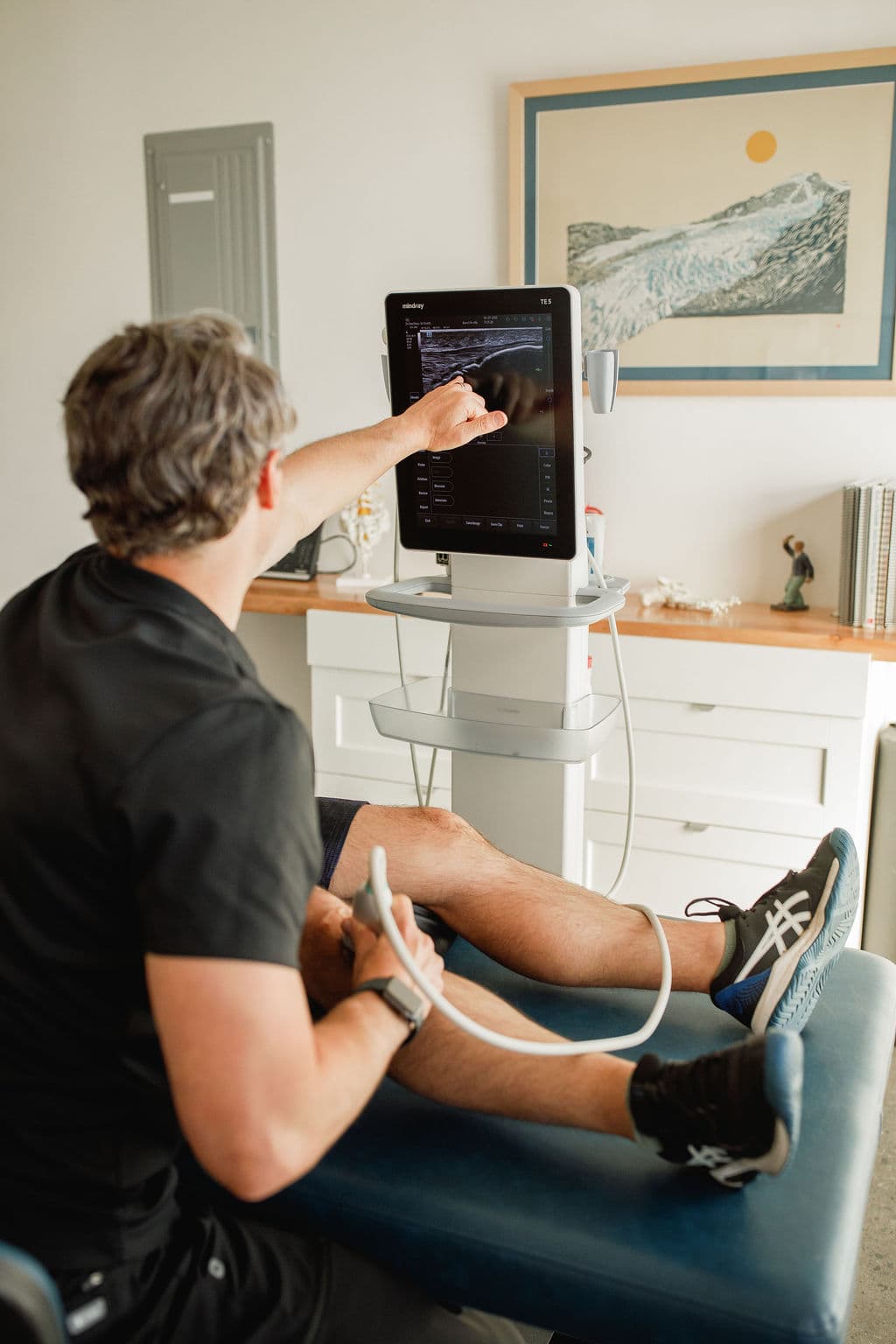
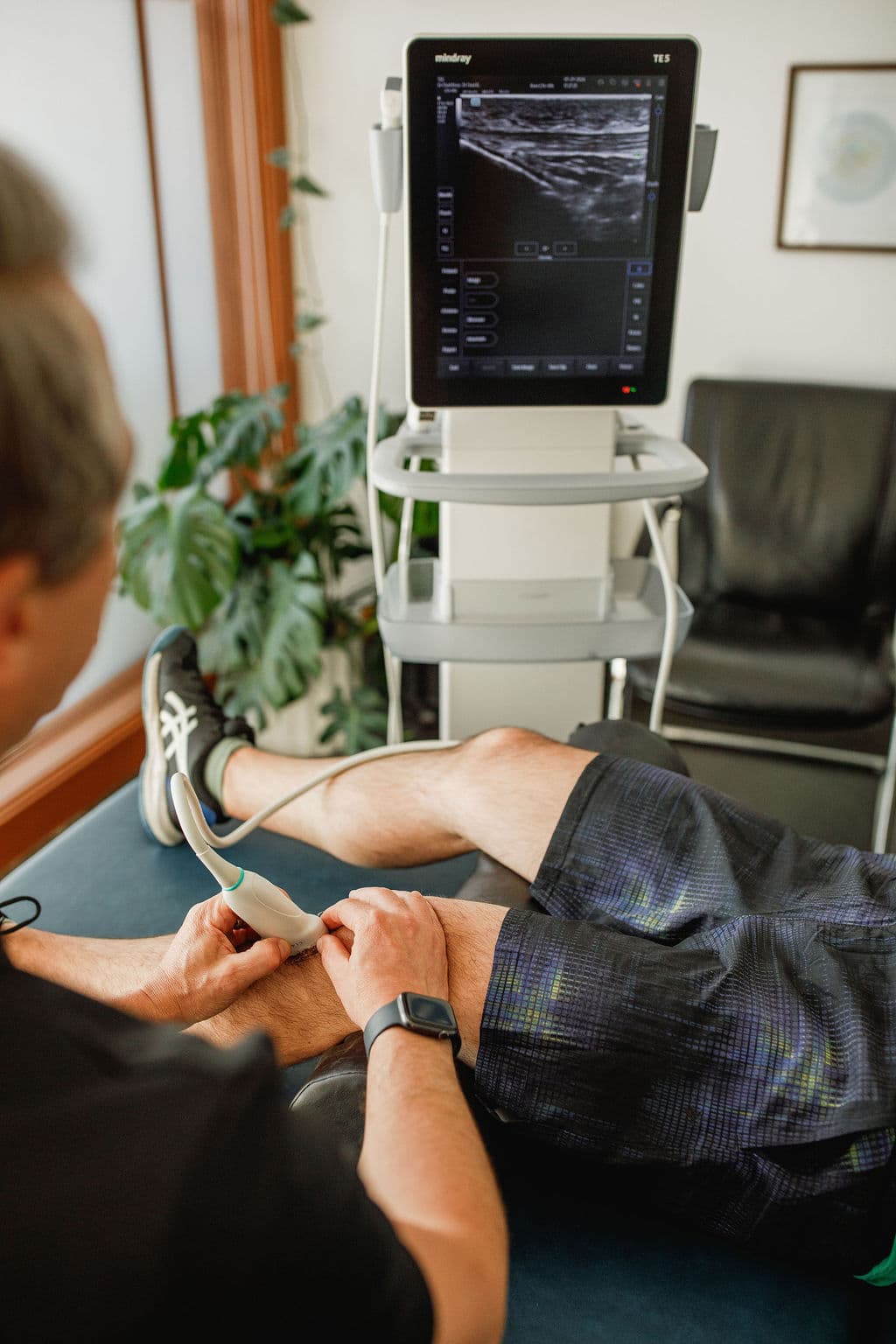
Dr. Borys uses ultrasound guidance to ensure precise placement of PRP directly into the affected tissue. For shoulder pain, rotator cuff tendinopathy, frozen shoulder, gluteal tendinopathy, and proximal hamstring tendinopathy are also among the conditions where PRP has meaningful supporting evidence.
Benefits of PRP therapy
PRP is a non-surgical option that may help reduce pain and improve function in selected joint and tendon conditions.
Uses your own blood — very low risk of rejection or allergic reaction
Minimally invasive, performed in-office, typically with ultrasound guidance for injection accuracy
Supported by clinical research for selected knee OA and tendon conditions
May help reduce pain and improve function without surgery in appropriate candidates
The PRP process
The entire procedure typically takes 90–120 minutes and is performed in-office.
Blood Draw
A small amount of blood is drawn from your arm, similar to a routine blood test.
Centrifugation
Your blood is processed in a centrifuge to concentrate the platelets and growth factors.
Ultrasound Guidance
Using real-time ultrasound imaging, Dr. Borys identifies the precise injection site.
Injection
The PRP is placed precisely into the target tissue or joint under ultrasound guidance.
How many PRP injections are typically needed?
There is no single answer — it depends on what is being treated. Tendons and joints behave differently, so the plan is tailored to your diagnosis rather than a fixed protocol.
Tendons
For many tendon problems, a single, well-dosed PRP injection is often enough. In chronic tennis elbow, a systematic review of level-I studies found PRP improved pain and function and outperformed cortisone by six months, and other research points to more durable relief than steroid injections — though results vary between studies. If symptoms persist, Dr. Borys generally waits at least three months before reassessing. See the full guide to PRP for tennis elbow for the research, candidacy, and what to expect.
Joints
Joints are different. Osteoarthritis is a chronic, progressive condition, so while PRP can meaningfully improve symptoms, the benefit isn't permanent. For an arthritic joint Dr. Borys often uses a short series of injections, reassessing as treatment progresses.
The knee is the most-studied joint for PRP. See the full guide to PRP for knee osteoarthritis for the research, candidacy, and what to expect.
Dr. Borys's approach to arthritis
For arthritic joints, Dr. Borys often recommends a short series of higher-dose PRP injections rather than a single injection. Osteoarthritis is an ongoing joint-environment problem, and a series may provide a more sustained signal to reduce inflammation and improve function. Treatment is paired with exercise and load management so improvements are more likely to hold.
None of this is one-size-fits-all — the number and spacing of injections is decided together after your exam and imaging.
What to expect after PRP
PRP is a gradual process, not an instant fix. Knowing what is normal afterward helps you support your own healing.
Some soreness is normal
Mild swelling, soreness, or stiffness at the injection site for a few days is expected and is part of the healing response.
Modify activity briefly
Most patients take it easy for a few days and gradually return to normal activity, following Dr. Borys’s specific guidance for your case.
Avoid anti-inflammatories
Unless directed otherwise, avoid NSAIDs (such as ibuprofen) around the procedure, since they can blunt the healing response PRP is meant to support.
Improvement takes time
PRP works gradually. Many patients notice clearer improvement around 6–12 weeks, with continued change over several months.
Conditions Treated with PRP
PRP is commonly considered for a range of musculoskeletal conditions, particularly chronic joint and tendon problems that haven't responded to conservative care.
Is PRP Right for You?
PRP can be a reasonable option for the right person, but it isn't ideal for everyone. A consultation and exam help determine whether it fits your situation.
PRP may be a good fit if you
- Are looking for a non-surgical option for chronic joint or tendon pain
- Have not had lasting relief from rest, therapy, or other conservative care
- Prefer a treatment that uses your own biological material
- Can allow several weeks to months for a gradual response
PRP may not be ideal if you have
- An active infection, certain blood or platelet disorders, or active cancer
- A need for immediate or guaranteed pain relief
- Very advanced, end-stage joint degeneration that may be better served by other options
- An inability to pause anti-inflammatory medications when advised
This list is a general guide, not medical advice. Dr. Borys will review your history, imaging, and goals to recommend the most appropriate option for you.
Not sure whether PRP fits your condition?
The first step is an initial visit to review your history, exam, and imaging before deciding whether PRP, another treatment, or no procedure is the right next step.
Book an initial visitClinical Research
Research is strongest for some conditions and more preliminary for others. The studies below are included to help patients understand where evidence is more established, where it is still evolving, and why proper diagnosis and patient selection matter.
PRP vs Hyaluronic Acid — 5-Year Follow-Up
Double-blind RCT (Di Martino et al., Am J Sports Med, 2019) with 5-year follow-up comparing PRP and hyaluronic acid injections for knee osteoarthritis.
Read on PubMedPRP for Chronic Tennis Elbow
Double-blind, multicenter RCT of 230 patients (Mishra et al., Am J Sports Med, 2014) showing meaningful improvement at 24 weeks with leukocyte-enriched PRP.
Read on PubMedPRP for Plantar Fasciitis: Systematic Review
Systematic review and meta-analysis (Herber et al., 2024) comparing PRP against other treatments for plantar fasciitis, finding PRP among the more effective options for pain relief.
Read on PubMedPRP for Rotator Cuff Tendinopathy: Meta-Analysis
Systematic review and meta-analysis of 30 RCTs (Roy et al., 2025) finding PRP provides significant short-term pain relief and functional improvement in rotator cuff tendinopathy, while noting that benefits beyond 12 months are less clearly established.
Read on PubMedPRP vs. Steroid for SI Joint Pain
Randomized trial (Singla et al., 2017) comparing ultrasound-guided PRP to steroid injection for chronic sacroiliac joint pain, where the PRP group showed greater and more durable relief at three months — using the same image-guided approach Dr. Borys relies on for accurate placement.
Read on PubMedWhat does it cost?
We believe in transparent pricing, so you can make an informed decision without pressure or surprises.
Most PRP treatments fall in this range per session, depending on the area treated.
How your cost is determined
Your exact cost is confirmed at your initial evaluation — which is a standard office visit that may be billed through insurance depending on your individual plan and coverage — before anything is scheduled.
The regenerative procedure itself is generally an out-of-pocket expense, since most plans still classify it as investigational. There are no hidden fees, and you will always know the cost before moving forward.
PRP therapy in Bellingham, WA
Dr. Borys offers PRP therapy in Bellingham at his clinic in Whatcom County. Every injection is performed under real-time diagnostic ultrasound — the same imaging used to clarify the target and guide placement — so the platelet concentrate reaches the right structure precisely.
Patients come from across Whatcom County, Skagit County, the San Juan Islands, and surrounding Northwest Washington communities, many having already tried cortisone or other conservative options without lasting relief.
PRP Therapy (Platelet-Rich Plasma): Common Questions
What is PRP therapy?
PRP (platelet-rich plasma) therapy is a regenerative treatment that uses concentrated platelets from a small sample of your own blood. After the blood is spun in a centrifuge to concentrate the platelets and growth factors, the PRP is injected under ultrasound guidance into the injured tendon, ligament, muscle, or joint to stimulate the body’s natural healing response.
What conditions can PRP therapy treat?
PRP is most commonly used for joint, tendon, ligament, and soft tissue conditions to support the body's natural healing response.
The strongest research support is for knee osteoarthritis, tennis elbow, and some cases of plantar fasciitis. PRP may also be considered for other tendon and joint problems, including patellar tendinopathy, Achilles tendinopathy, gluteal tendinopathy, hamstring injuries, mild-to-moderate hip or ankle arthritis, and select rotator cuff injuries.
Not every condition responds the same way, and PRP is not appropriate for everyone. Dr. Borys will review your symptoms, exam, imaging, and goals to determine whether PRP is a reasonable option for your condition.
Does PRP therapy hurt?
Most patients tolerate PRP injections well. The blood draw feels like a routine lab test, and a local anesthetic is typically used at the injection site. Some soreness in the treated area for a few days afterward is normal and is generally part of the healing response.
Is PRP therapy covered by insurance?
PRP therapy is not covered by insurance and is an out-of-pocket expense. While clinical research supports its use for select conditions, most insurance plans still classify it as investigational.
Before proceeding, Dr. Borys will review pricing, expected costs, and whether PRP is clinically appropriate for your condition.
What about stem cell therapy or "stem cell products"?
Dr. Borys does not offer stem cell injections for orthopedic conditions. Many products marketed as stem cells — including donor-derived, amniotic, umbilical cord, Wharton's jelly, and exosome products — are not FDA-approved for arthritis, tendon injuries, or spine pain, and carry documented safety concerns and regulatory restrictions.
PRP is different: it uses your own blood, is prepared at the point of care, and has stronger clinical evidence for select conditions such as knee osteoarthritis and certain tendon injuries. Dr. Borys focuses on evidence-informed regenerative options with clear safety profiles.
If you've encountered stem cell treatments elsewhere, Dr. Borys welcomes discussing what you've learned and how your specific condition might best be treated.
Am I a candidate for PRP?
You may be a candidate for PRP if you have a joint, tendon, ligament, or soft tissue condition that has not improved enough with conservative care such as physical therapy, exercise, bracing, or other nonsurgical treatments.
Dr. Borys will review your symptoms, exam, imaging, medical history, medications, and goals to determine whether PRP is a reasonable option for you.
What should I expect after PRP treatment?
Mild soreness, stiffness, or swelling is common for a few days after PRP and usually improves within the first week.
Most patients take it easy for the first few days, avoid NSAIDs (ibuprofen, naproxen) unless directed otherwise, and gradually return to activity based on the treatment area and symptoms. Light movement is usually encouraged, while heavy lifting, running, sports, and high-impact activity may need to be limited for a period of time.
PRP results are gradual. Many patients begin noticing improvement over 6–12 weeks, with continued progress over several months when paired with appropriate rehabilitation and activity progression.
How long do PRP results last?
PRP results vary by condition, severity, overall health, activity level, and follow-through with rehabilitation.
For knee arthritis, research shows that when PRP is effective, benefits typically peak around 3–6 months and can last 12 months or longer — with some studies showing sustained improvement for several years, especially in earlier-stage arthritis. More advanced arthritis tends to respond for a shorter period. PRP isn't a proven way to reverse arthritis, though some research suggests it may help slow cartilage loss; more reliably, it can reduce pain and improve function for a meaningful window of time.
For tendon conditions like tennis elbow and plantar fasciitis, PRP tends to work more gradually than a cortisone shot, but the relief is often more durable — commonly lasting 1–2 years in studies.
Some patients benefit from a single treatment course, while others may choose to repeat treatment if symptoms return. The goal is better tissue tolerance, improved movement, and a plan to help you stay active longer. Dr. Borys will discuss realistic expectations based on your specific condition.
Have questions before booking? Check our FAQ
Is PRP the right option for your condition?
It starts with an initial visit and exam to review your diagnosis and whether PRP is a reasonable fit — a standard medical evaluation that may be billed through insurance depending on your individual plan and coverage.