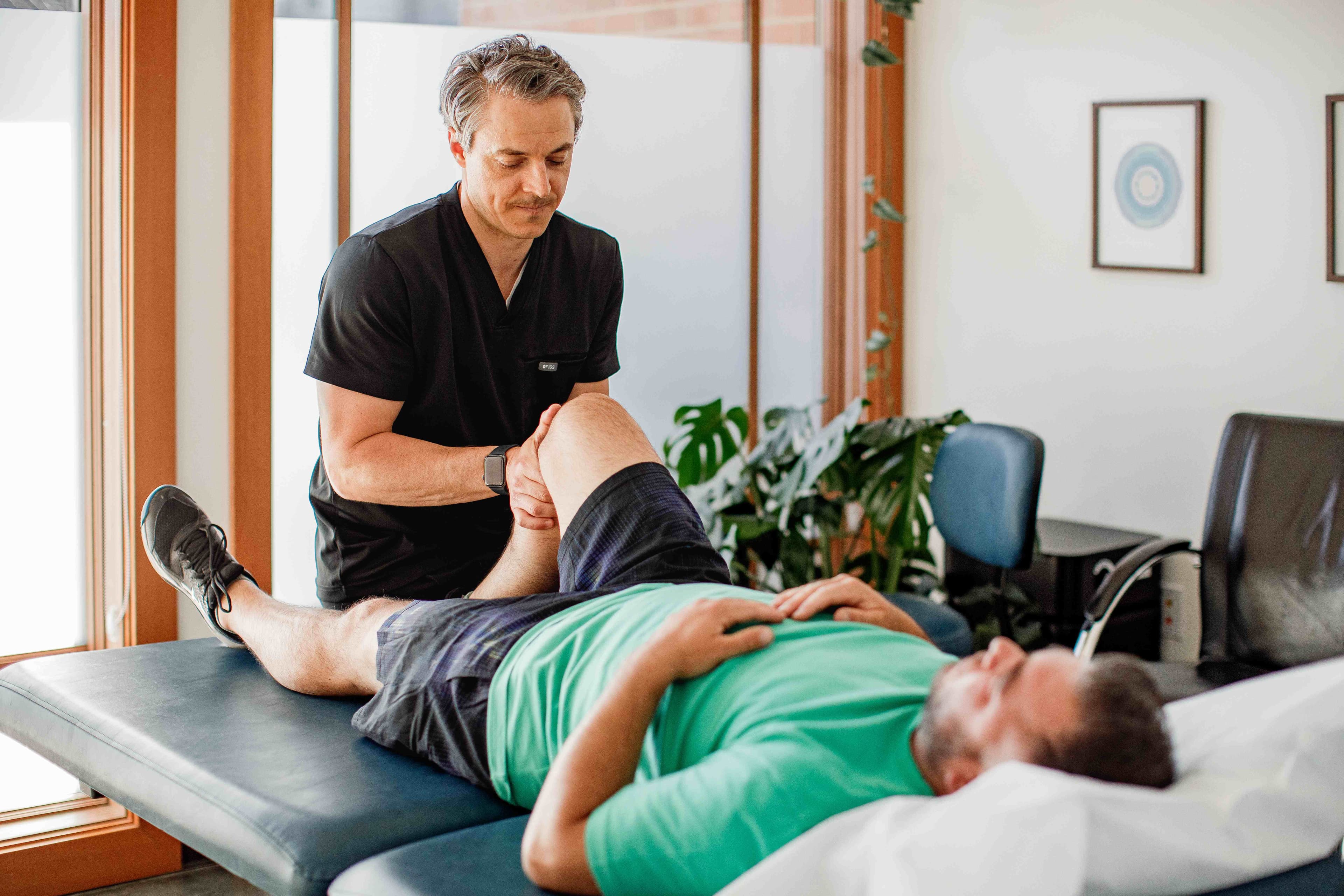
Naturopathic Medicine
Dr. Borys's naturopathic training informs a whole-person approach to musculoskeletal pain, orthopedic evaluation, and regenerative treatment. The focus is not vague wellness care; it is helping identify what is keeping an injury, joint, tendon, or nerve problem from improving.
Book an initial visitHow naturopathic support fits in
Dr. Borys is a naturopathic doctor in Bellingham focused on chronic joint, tendon, nerve, and musculoskeletal pain. Licensed as an ND in Washington State, he focuses on regenerative musculoskeletal medicine, and his naturopathic training informs how he diagnoses and treats injuries — applied alongside modern diagnostics and ultrasound-guided injection therapies, not in place of them.
He graduated from Bastyr University, one of the leading naturopathic medical schools in the country, and has completed specialized training in regenerative orthopedic medicine and ultrasound-guided injection techniques. Based in Bellingham, his practice provides focused, non-surgical orthopedic care to patients throughout Whatcom County and the surrounding region.
This integrated approach allows for comprehensive musculoskeletal care — addressing not just the injured tissue, but also the factors (nutrition, sleep, stress, metabolic health) that influence healing. The goal is helping your body recover durably, not just managing symptoms. This is also why Dr. Borys pushes back on the idea that joint pain is just a normal part of aging.
Principles of Naturopathic Medicine
These foundational principles guide every aspect of naturopathic care.
First, Do No Harm
Use the most natural, least invasive, and least toxic therapies first.
Identify Drivers
Look beyond symptoms to understand the underlying factors contributing to pain and dysfunction.
Doctor as Teacher
Educate and empower patients to take responsibility for their own health.
Treat the Whole Person
Address the physical, lifestyle, metabolic, and recovery factors that influence healing.
Prevention
Focus on overall health promotion and disease prevention.
Support the Body's Own Processes
Where appropriate, support the body's own capacity for adaptation and recovery alongside evidence-informed treatment.
Naturopathic Principles in Regenerative Orthopedics
Dr. Borys's naturopathic background shapes his approach to regenerative musculoskeletal care. Rather than injections alone, he looks at the entire context of healing — what nutrition, sleep, stress, and lifestyle factors may be hindering recovery.
Whole-Person Care
Regenerative treatments work best when the whole person is optimized for healing. Factors like nutrition, sleep quality, stress levels, and overall metabolic health all influence how well your body responds to treatment.
Dr. Borys takes time to understand your complete health picture and may make recommendations beyond injection therapy to support your healing journey.
Naturopathic Medicine: Common Questions
What is naturopathic medicine?
Most pain care chases the symptom — an injection or a pill where it hurts, then back again when it returns. Naturopathic medicine asks why the pain is there in the first place. For Dr. Borys, that means combining the diagnostics and regenerative treatments of modern musculoskeletal medicine with attention to the things that keep an injury from healing: how you move, what's inflamed, and what's gone unaddressed. The goal is to improve the conditions that support recovery — movement, nutrition, sleep, inflammation, and metabolic health.
How does a naturopathic doctor approach pain?
The painful spot is rarely the whole story. A knee that hurts may be loaded wrong by the hip above it; a tendon that won't heal may be starved by poor circulation or stalled by inflammation. Dr. Borys starts with a thorough history and exam — often with diagnostic ultrasound to see the tissue directly — to find what's actually driving the problem. From there, treatment is matched to you: regenerative therapies like prolotherapy, PRP, or shockwave to stimulate repair, supported by movement and lifestyle changes.
What conditions does Dr. Borys treat?
Most patients come in for joint, tendon, and ligament pain that hasn't resolved with rest, physical therapy, or injections elsewhere — knees, shoulders, hips, elbows, plantar fasciitis, and chronic tendon injuries. If you've been told the next step is surgery or simply "living with it," a regenerative evaluation is often worth having first.
What training do naturopathic doctors have?
Licensed naturopathic doctors in Washington complete a four-year, accredited doctoral program in addition to their undergraduate degree. The curriculum covers biomedical sciences — anatomy, physiology, pharmacology, and diagnosis — alongside training in nutrition, natural therapies, and physical medicine. Clinical rotations provide supervised patient care before graduation. To practice in Washington, NDs must pass national board examinations and maintain state licensure, which requires ongoing continuing education.
Experience integrative care
It starts with an initial visit — a different approach to musculoskeletal care that treats you as a whole person, not just a collection of symptoms. This standard medical evaluation may be billed through insurance depending on your individual plan and coverage.